
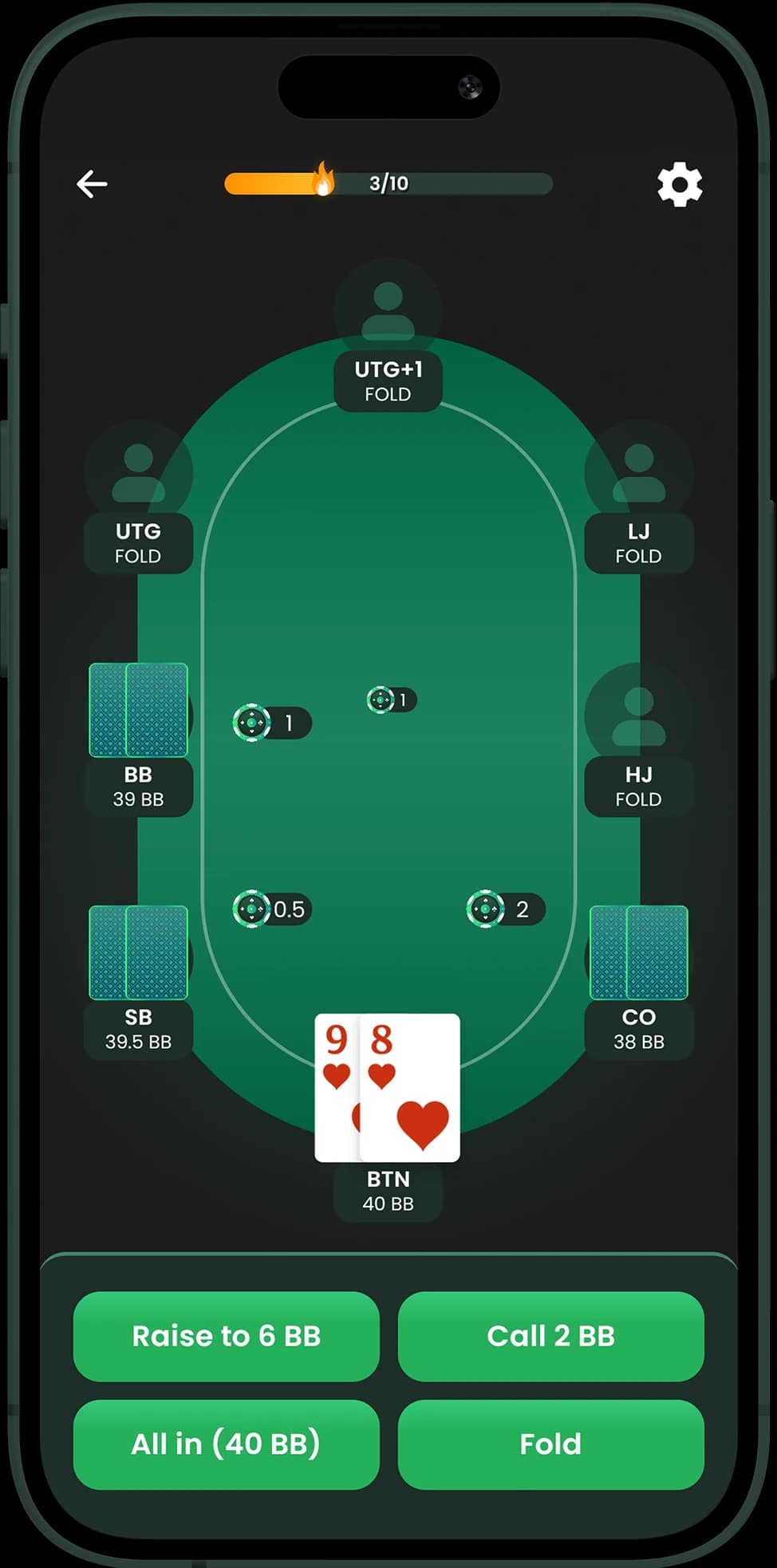
Starting Hand Selection: The Foundation of Winning Poker
Which hands you play — and from which positions — determines more of your long-term result than any other skill in poker. Here's the complete guide.
Start trainingWhy Starting Hand Selection Is the Foundation
Starting hand selection determines your equity in every hand before a single community card is dealt. Enter the pot with a range advantage — playing stronger hands on average than your opponents — and your postflop edge is amplified. Enter with a range disadvantage — playing too wide or from the wrong positions — and your postflop skill has to overcome a built-in deficit. The best postflop players in the world are still losing if they play the wrong hands. The correct starting point is always hand selection.
Start training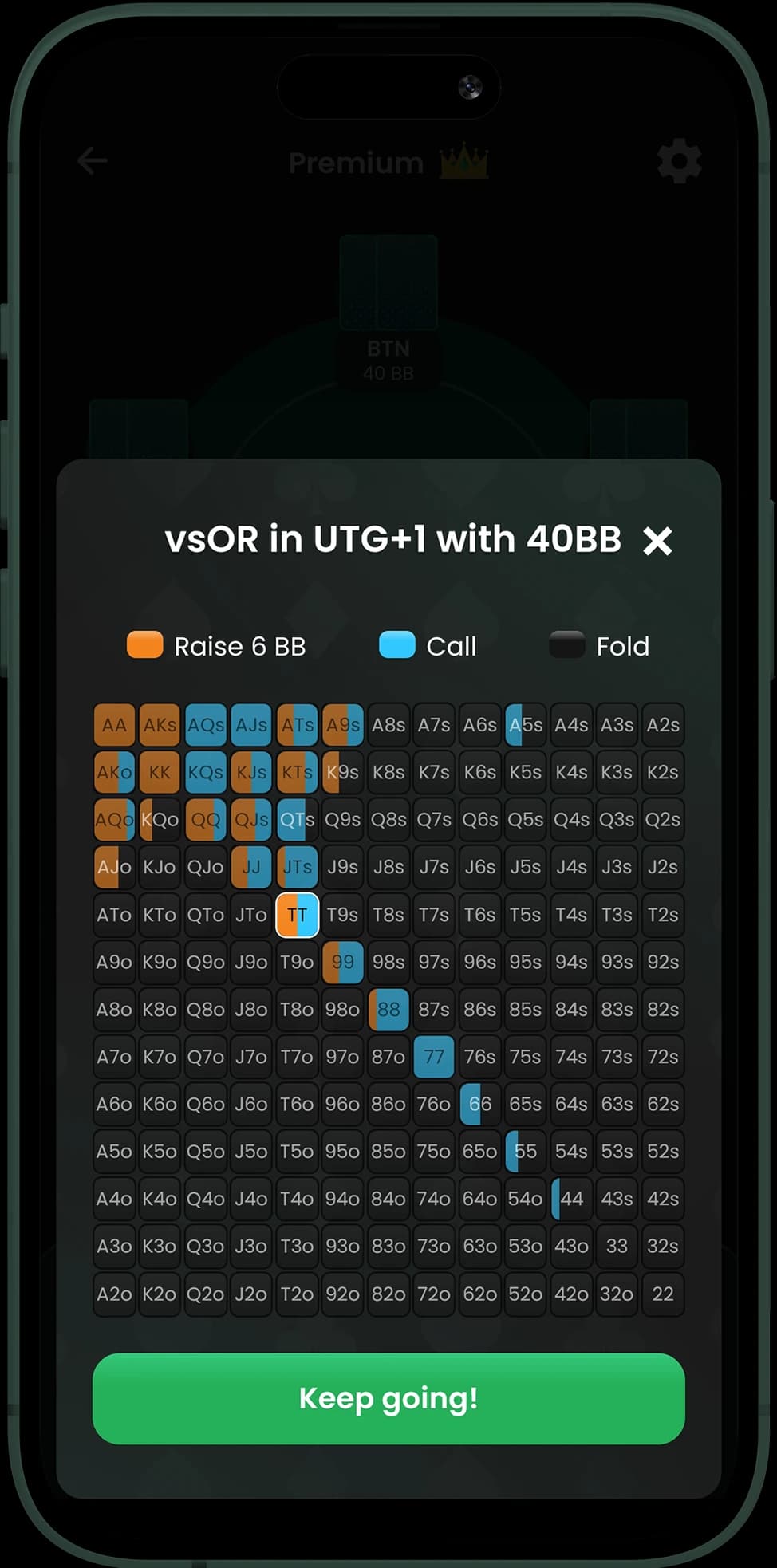
Premium Hands: What to Always Play and How
The hands that make money from everywhere
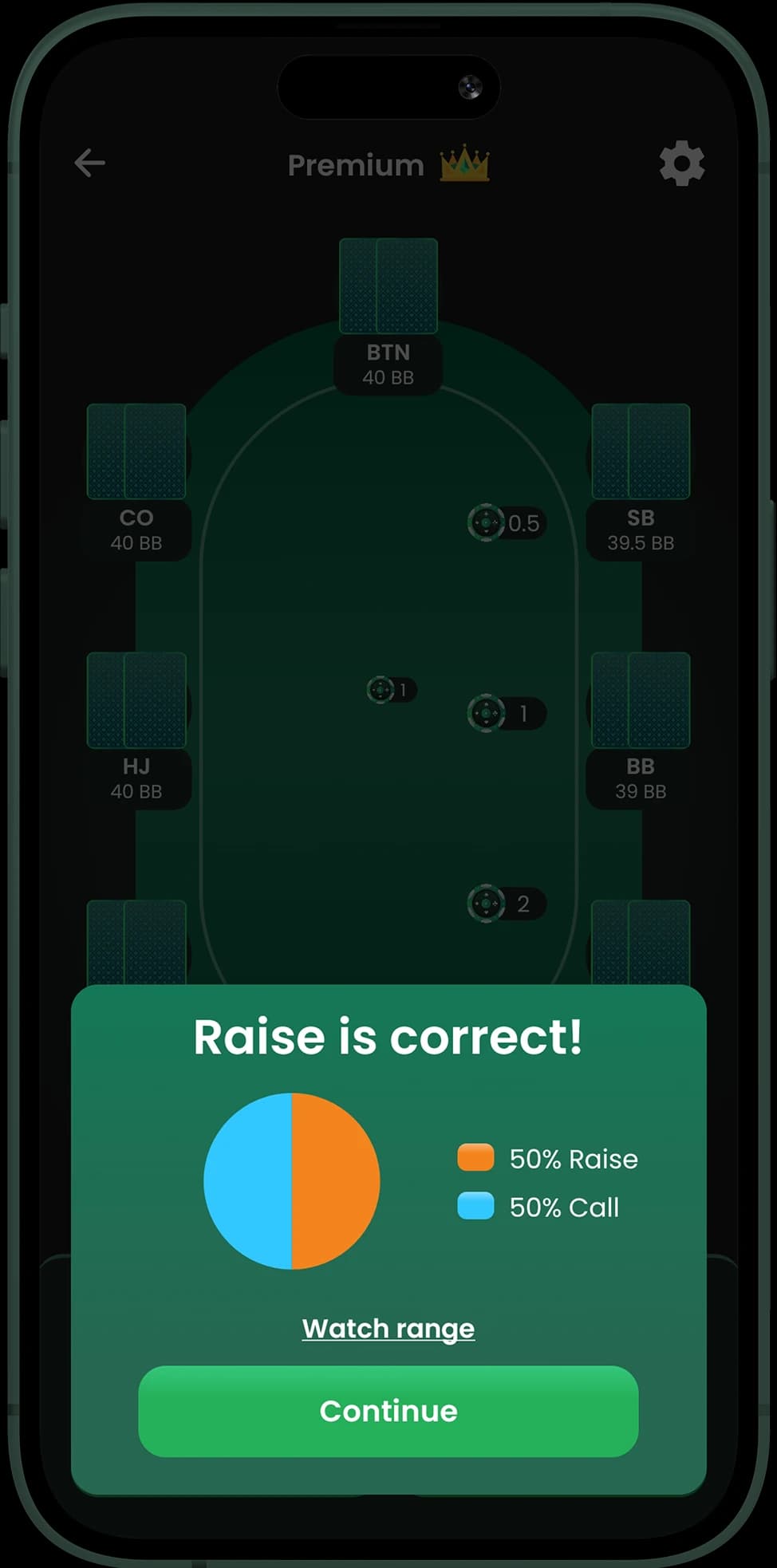
AA, KK, QQ, JJ, and AK are premium hands that should be played from all positions. The question isn't whether to play them but how: almost always with a raise, frequently with a 3-bet against an open, and with 4-bet action against 3-bets in most situations. These hands dominate most ranges and should be played aggressively to build pots when ahead. Mistakes with premium hands tend to involve underplaying them (limping AA, calling with KK) rather than overplaying, though stack depth considerations apply.
Speculative Hands: When and Where They Have Value
The hands that need the right conditions to be profitable
Suited connectors (87s, 76s), small pairs (22-55), and suited aces (A2s-A5s) are speculative hands that are profitable only in the right conditions: late position, deep stacks, multiway pots. In late position with 100bb+ stacks, these hands can make disguised flushes, straights, and sets that win large pots. In early position or short-handed, they lose much of their value because you're often out of position and can't afford the set-mining investment. Playing speculative hands from the wrong position is one of the most common recreational player mistakes.
The Trap Hands: Hands That Look Better Than They Are
Identifying and avoiding the hands that cause the most trouble
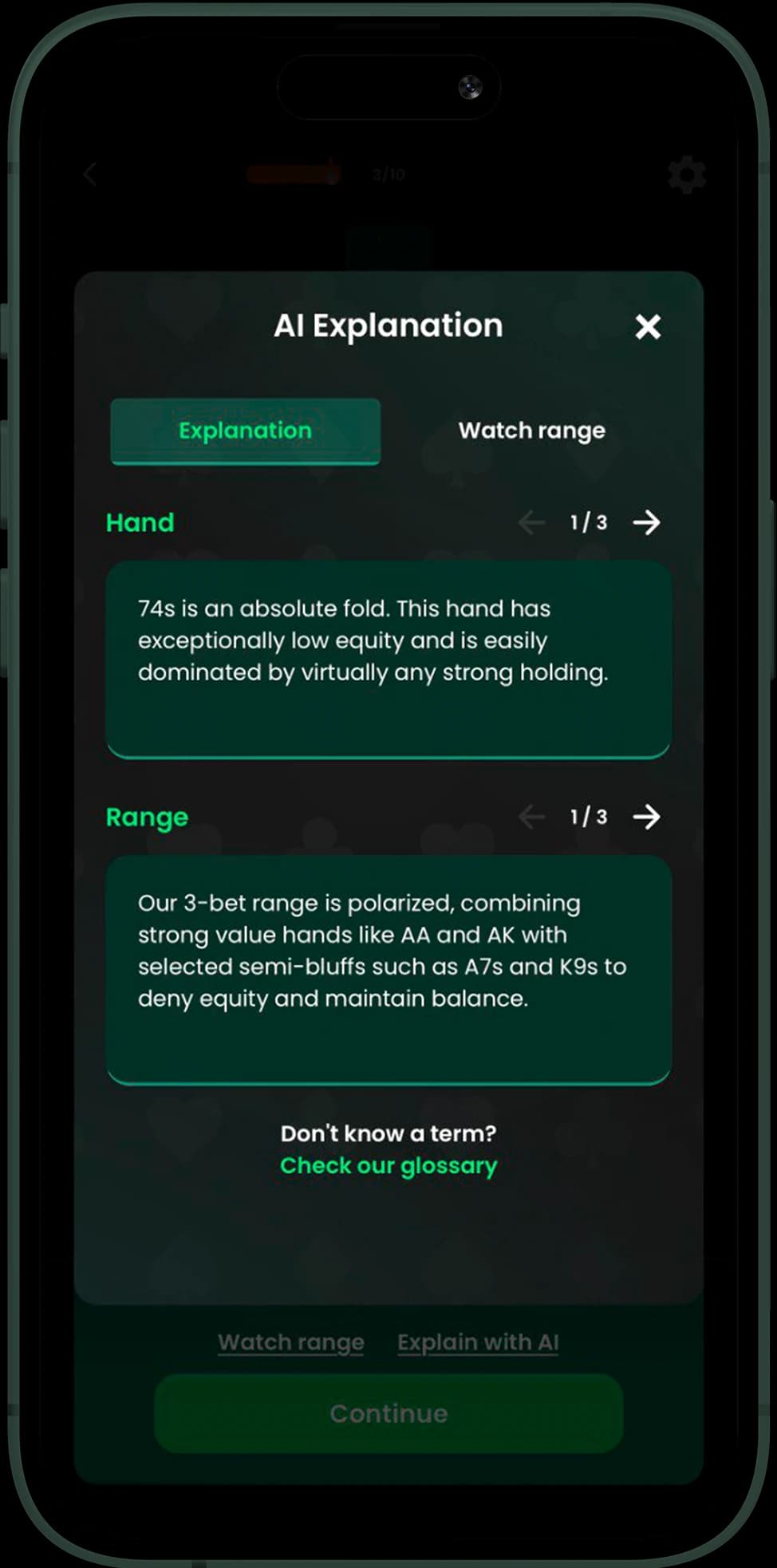
KJo, QJo, KTo — these 'pretty' off-suit broadways are among the most commonly overplayed hands in recreational poker. They look strong because they contain high cards. But from early position, they're dominated by AK, AQ, KQ, and pairs — all of which are in typical opening ranges. When KJo faces a 3-bet, it's in terrible shape against the 3-betting range. Playing these hands from the wrong positions creates consistent, avoidable losses. The rule: off-suit connected hands below KQo should generally wait for late position.
Position-Specific Starting Hand Guide: The Practical Reference
What to open from each seat at the table
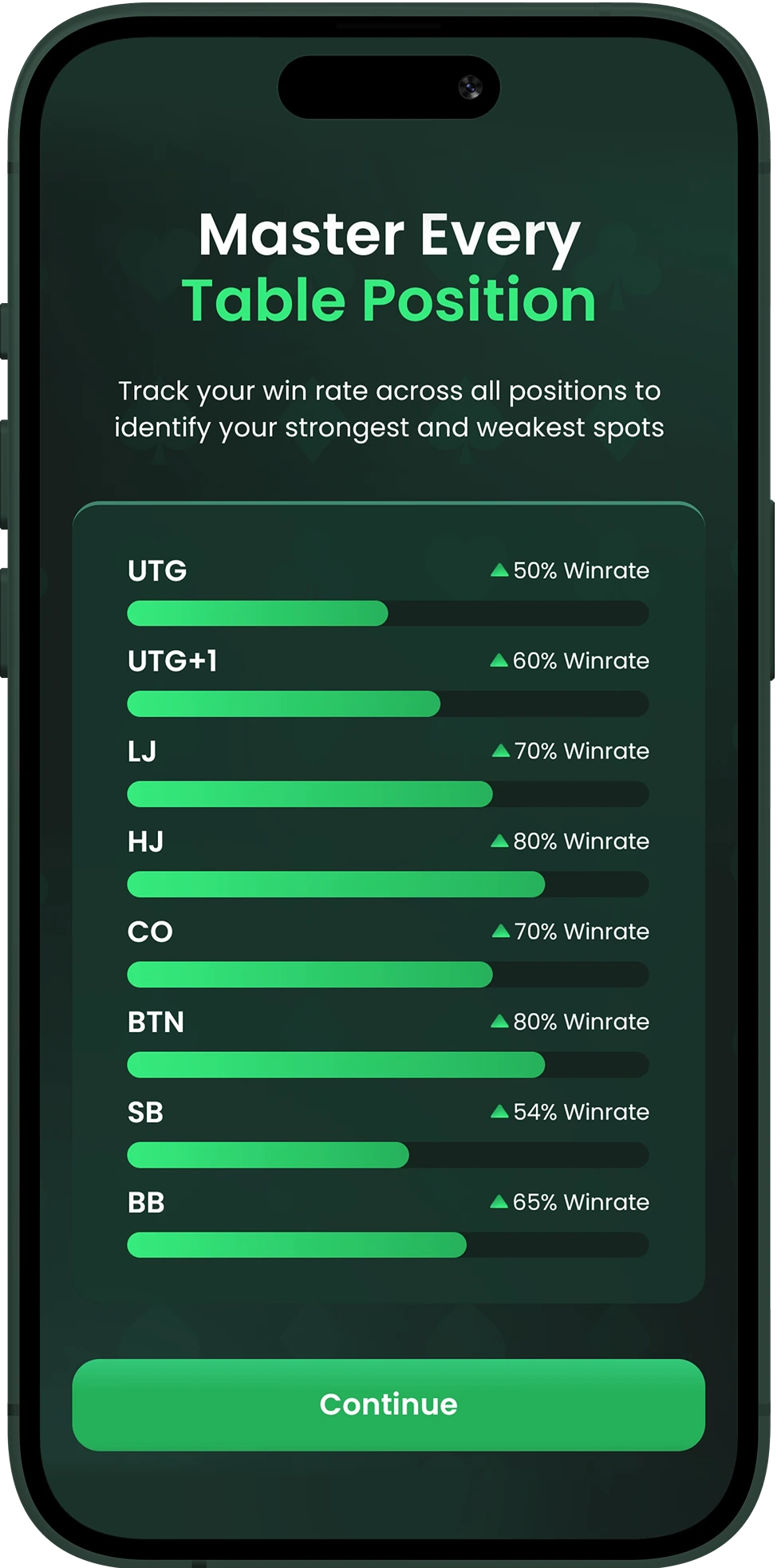
UTG: AA-77, AKs-AJs, KQs, AKo. Open approximately 13% of hands. HJ: Add TT-88, ATs-A9s, KJs, QJs, AQo. Open approximately 17%. CO: Add 77-55, A8s-A5s, KTs, QTs, JTs, KQo. Open approximately 25%. BTN: Add smaller pairs, suited connectors down to 65s, Axs, KJo, QJo. Open approximately 45%. These are approximate GTO-derived ranges — actual percentages vary slightly by game conditions. The key principle: each position to the left allows progressively wider opening because of positional advantage.
Start training
Starting Hand Selection FAQ
Start training
Build a Winning Hand Selection Strategy
Download PreflopAI and train position-specific starting hand selection with AI-powered feedback.