
Poker Hand Ranges: The Concept That Separates Winners from Losers
Winning players don't think about individual hands — they think in ranges. Understanding this single concept changes everything about how you approach preflop decisions.
Start trainingWhat Is a Hand Range in Poker?
A hand range is the complete set of hands a player might have in a given situation. Instead of asking 'what does my opponent have?' (nearly impossible to know), range-thinking asks 'what is the full distribution of hands they might have, given their actions?' This is equally important for your own play: instead of deciding whether to play a specific hand, you decide what range of hands to play from a given position. Constructing and executing correct ranges is what winning preflop strategy fundamentally is.
Start training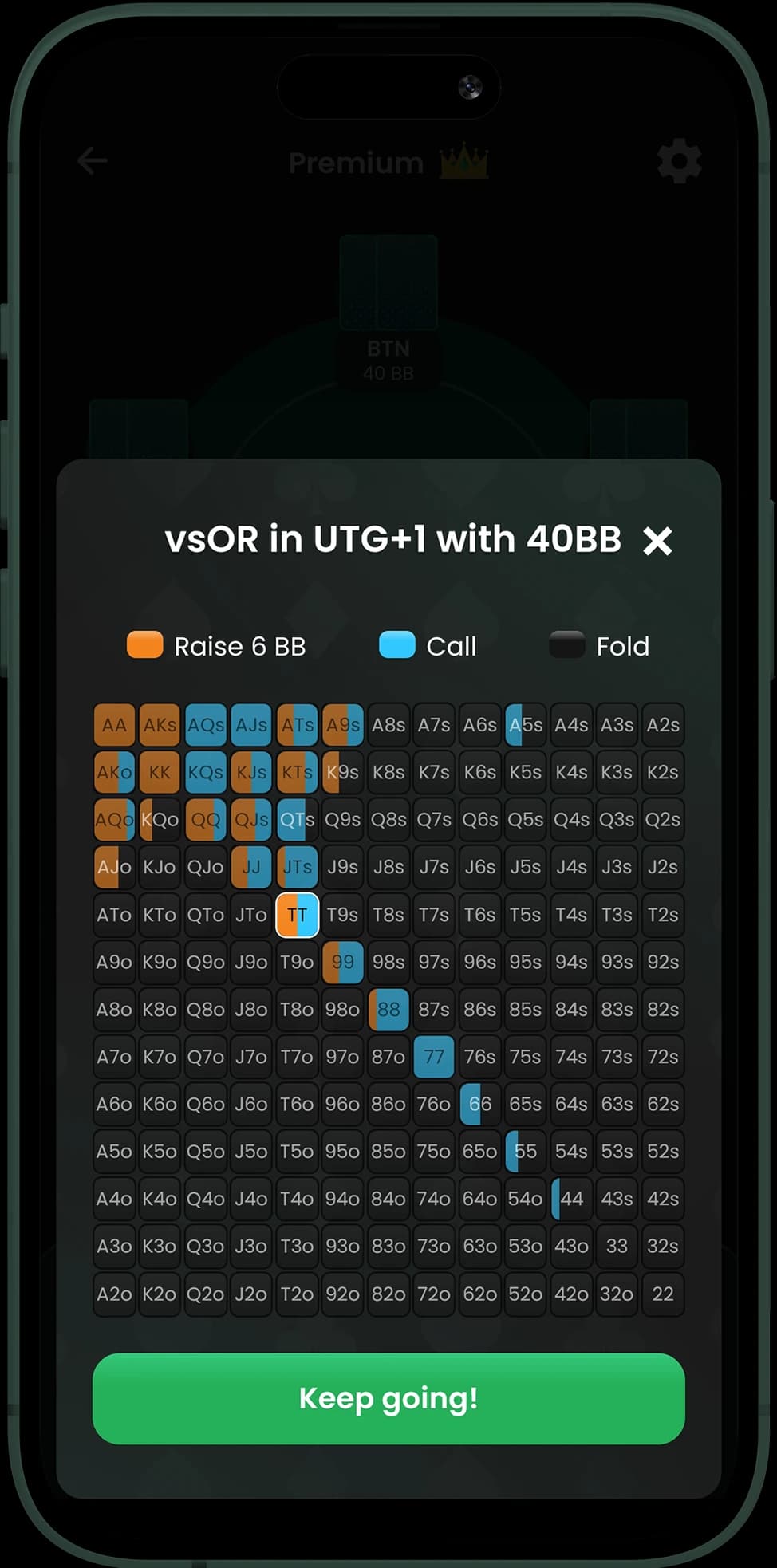
Why Range-Based Thinking Changes Your Preflop Decisions
The practical impact on hand selection
When you think in ranges, you stop making individual hand decisions and start constructing balanced, position-appropriate ranges. You realize that KJo from UTG isn't just a question of 'is this hand good enough?' — it's 'does this hand belong in my UTG opening range?' Since UTG ranges should only include the top 12-15% of hands, and KJo is not in that group, the question answers itself. Range-thinking provides a framework that removes guesswork and replaces it with structured decision criteria.
Your Range vs Your Opponent's Range: The Core of Preflop Analysis
Why ranges interact and why that determines the correct play
Every preflop decision is a comparison of ranges, not hands. When you open from the button, you're playing your button range against the ranges your opponents might 3-bet or call with. When you consider 3-betting, you're evaluating whether your range benefits from raising against the opener's range. This range-vs-range analysis is how professionals think about poker, and even a basic understanding of it immediately improves decision quality. You don't need to calculate precisely — you need to understand whether your hand 'belongs' in the range you're constructing.
How to Read and Use a Preflop Range Chart
Translating the 13x13 grid into actionable decisions
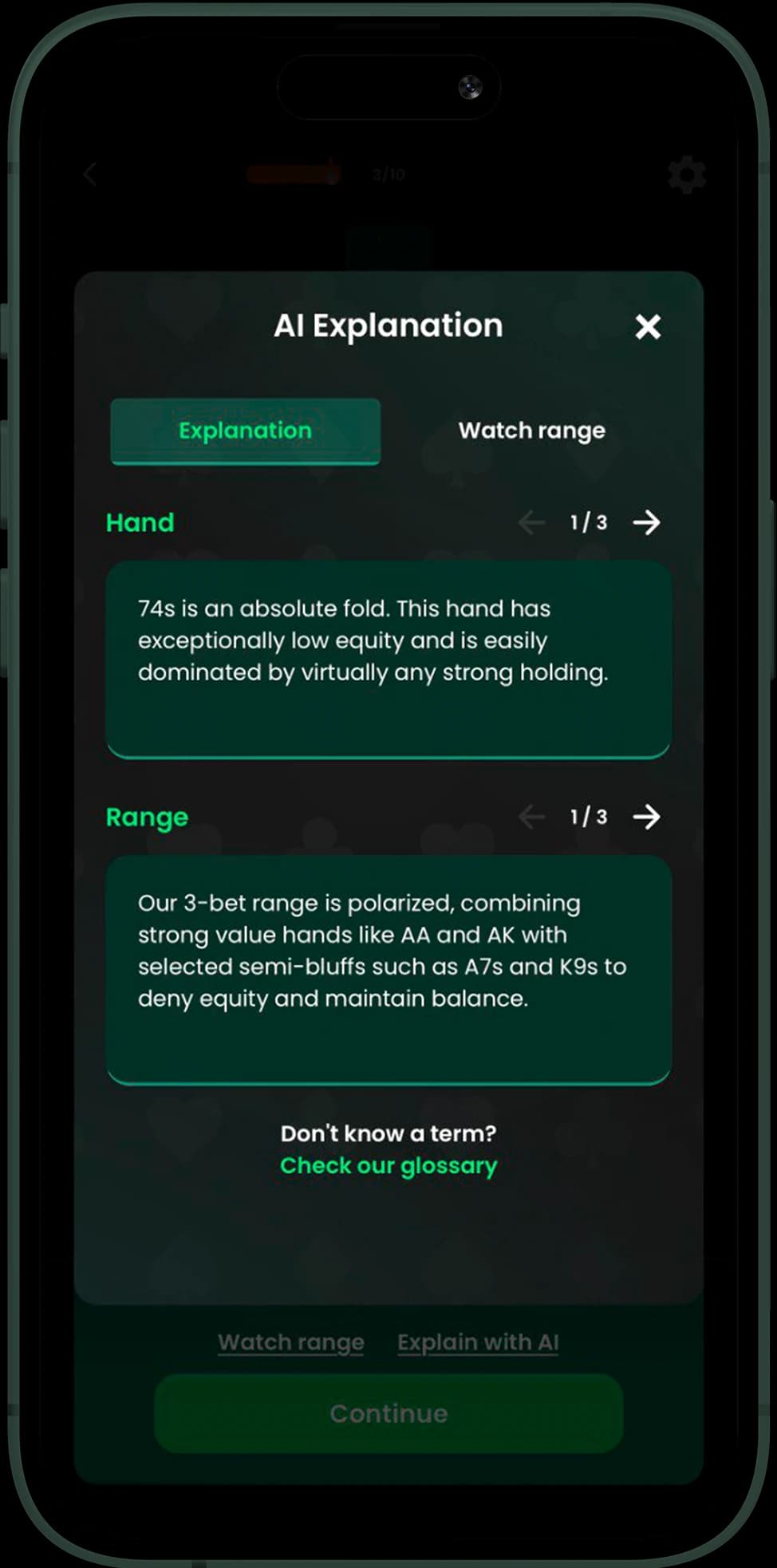
Preflop ranges are typically displayed on a 13x13 grid — 169 possible starting hands color-coded by action. Suited hands appear above the diagonal, offsuit below, pairs along the diagonal. Green indicates raise, red indicates fold, mixed colors indicate mixed strategies (sometimes raise, sometimes fold). Learning to read these charts is straightforward. Internalizing them — knowing instinctively which hands belong in each position's range — requires active practice. Simply reading the chart isn't enough; you need to practice making decisions under conditions that simulate the table.
From Range Charts to Automatic Decisions: The Practice Bridge
How to close the gap between knowing and doing
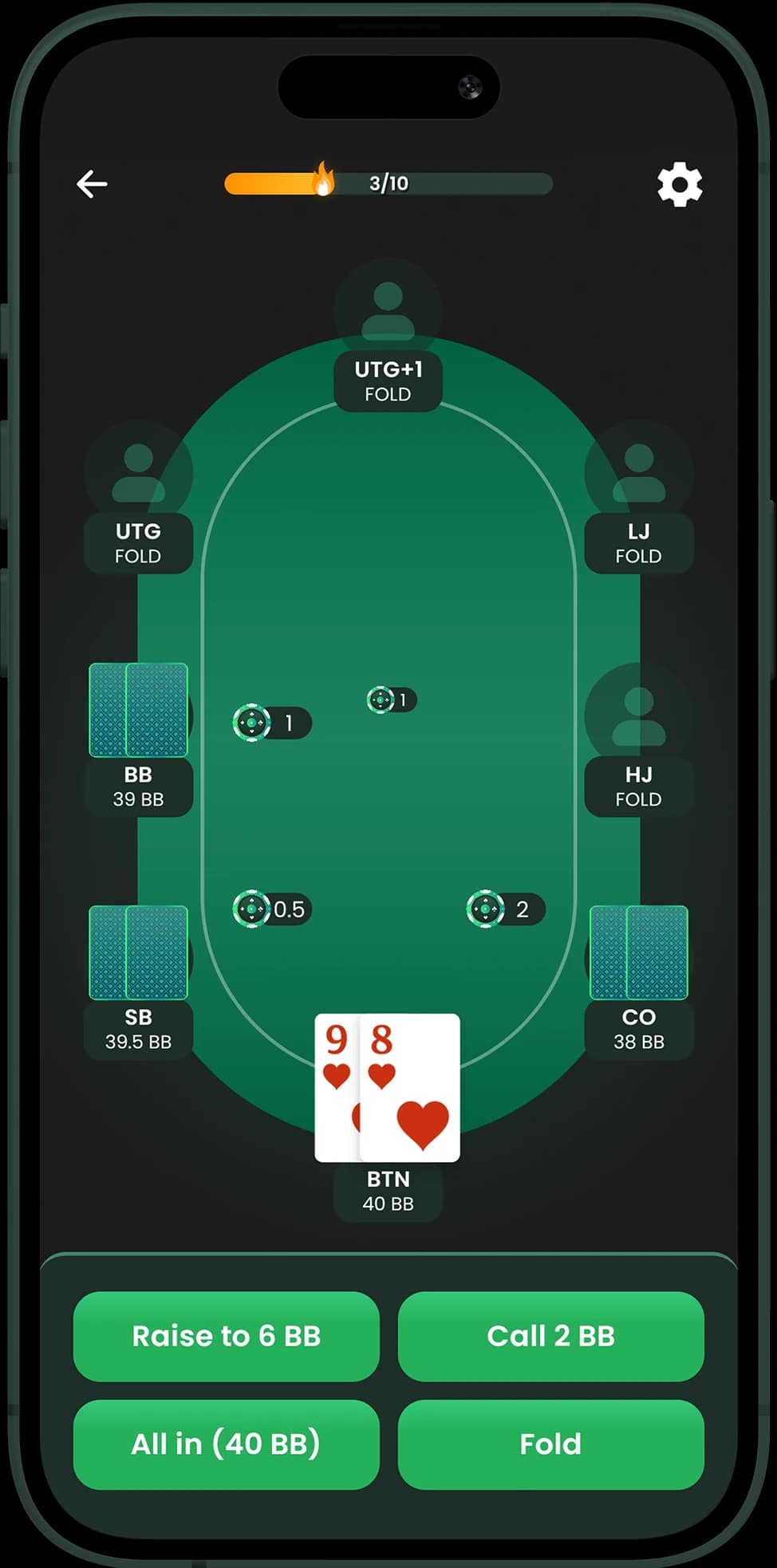
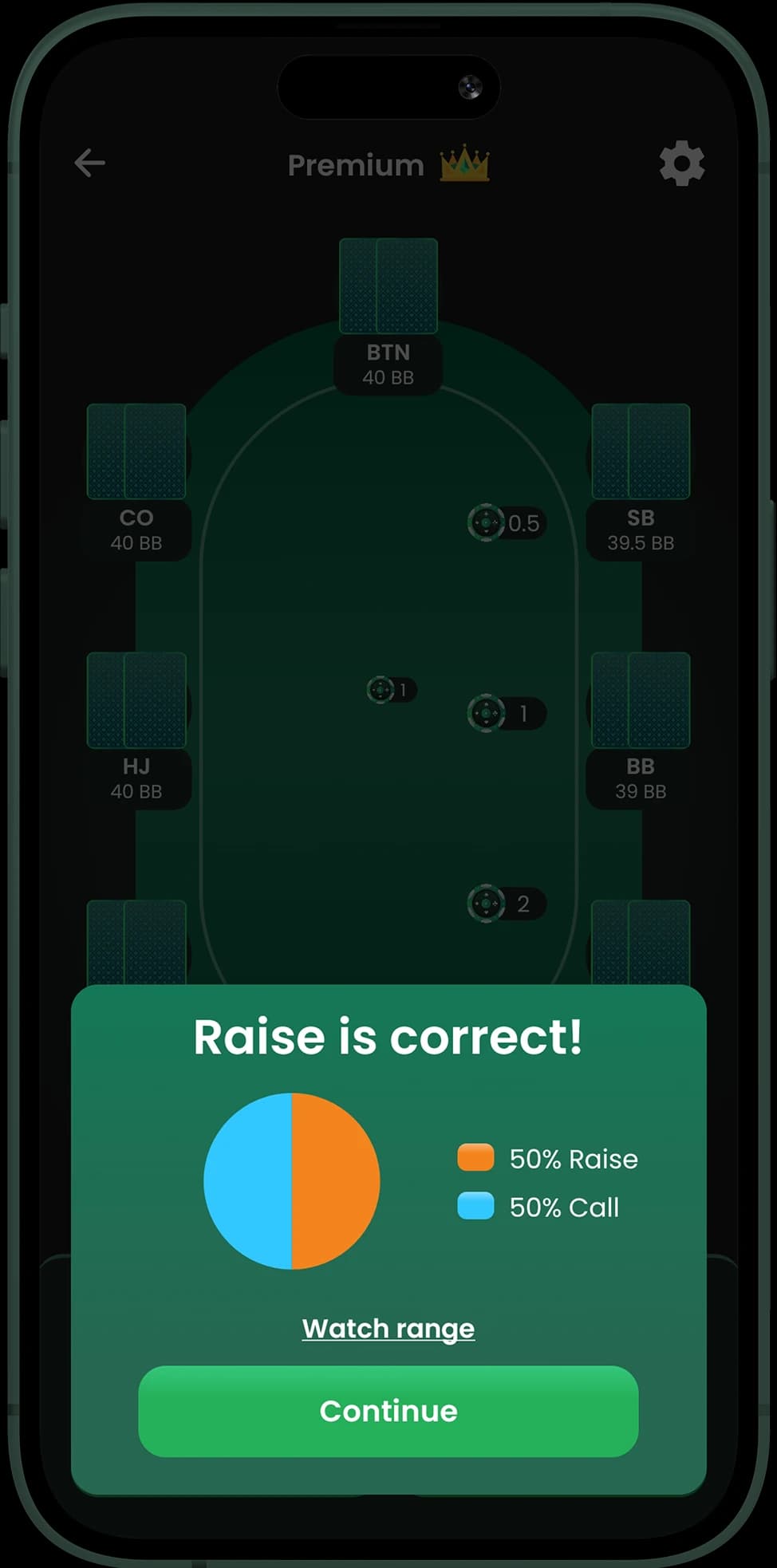
The gap between understanding range theory and executing it correctly at the table is bridged by active practice. You know that UTG range is 12-15%. But in the moment, with a specific hand, can you immediately determine if it's in that range? That instant recognition — the intuitive knowing without having to calculate — comes only through repetition. Flashcard-style training where you're shown a hand, position, and action, and must respond correctly, builds exactly this intuitive range recognition. This is what separates studying ranges from actually knowing them.
Start training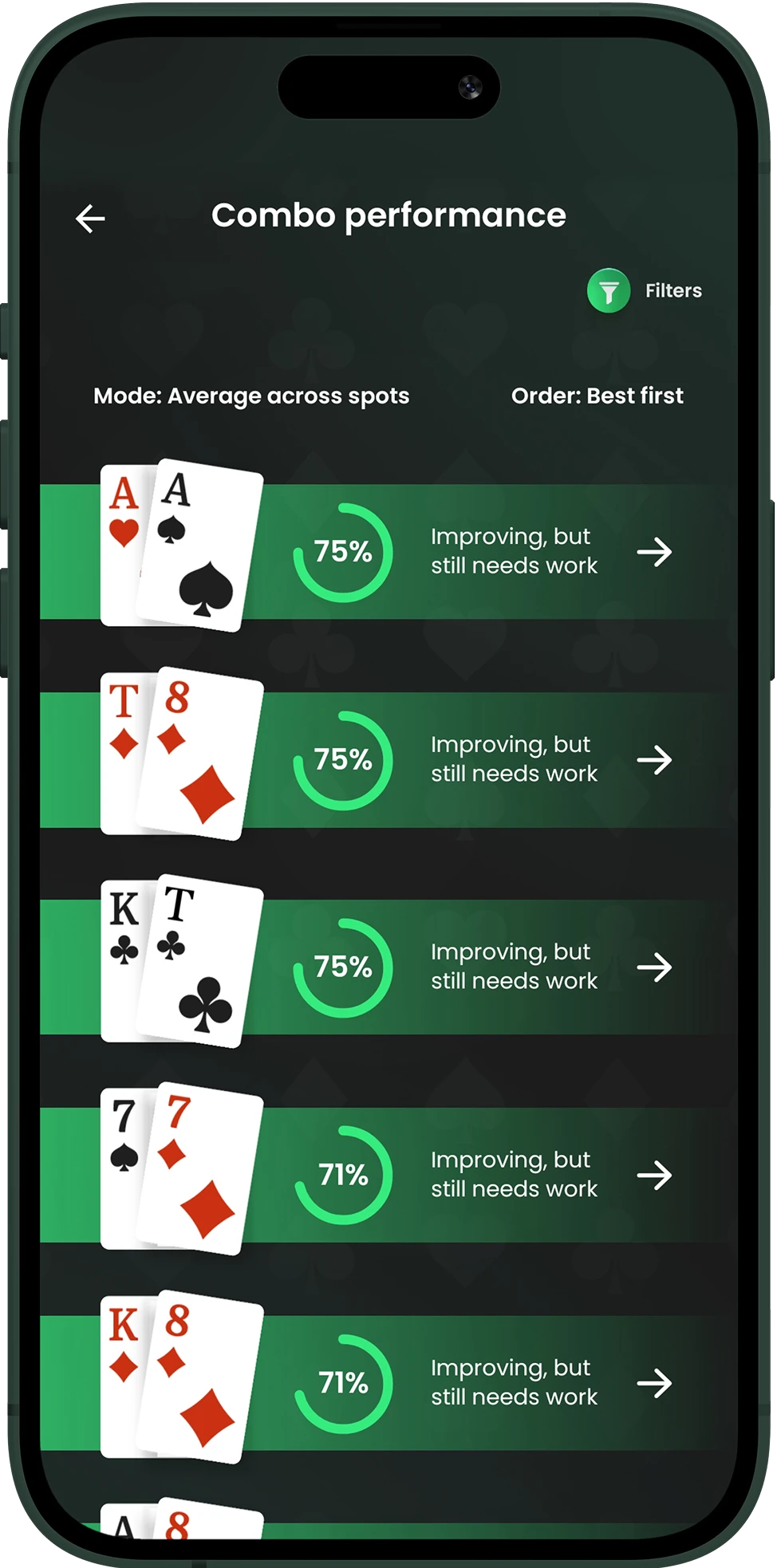
Poker Hand Ranges FAQ
Start training
Start Building Your Preflop Range Knowledge
Download PreflopAI and internalize correct ranges through active, AI-powered practice.