
Bad Beats vs Bad Play: What's Really Causing Your Poker Losses
Bad beats feel like the reason you're losing. In most cases, they're not. Here's how to tell the difference — honestly.
Start trainingWhat Is a Bad Beat — and What Isn't
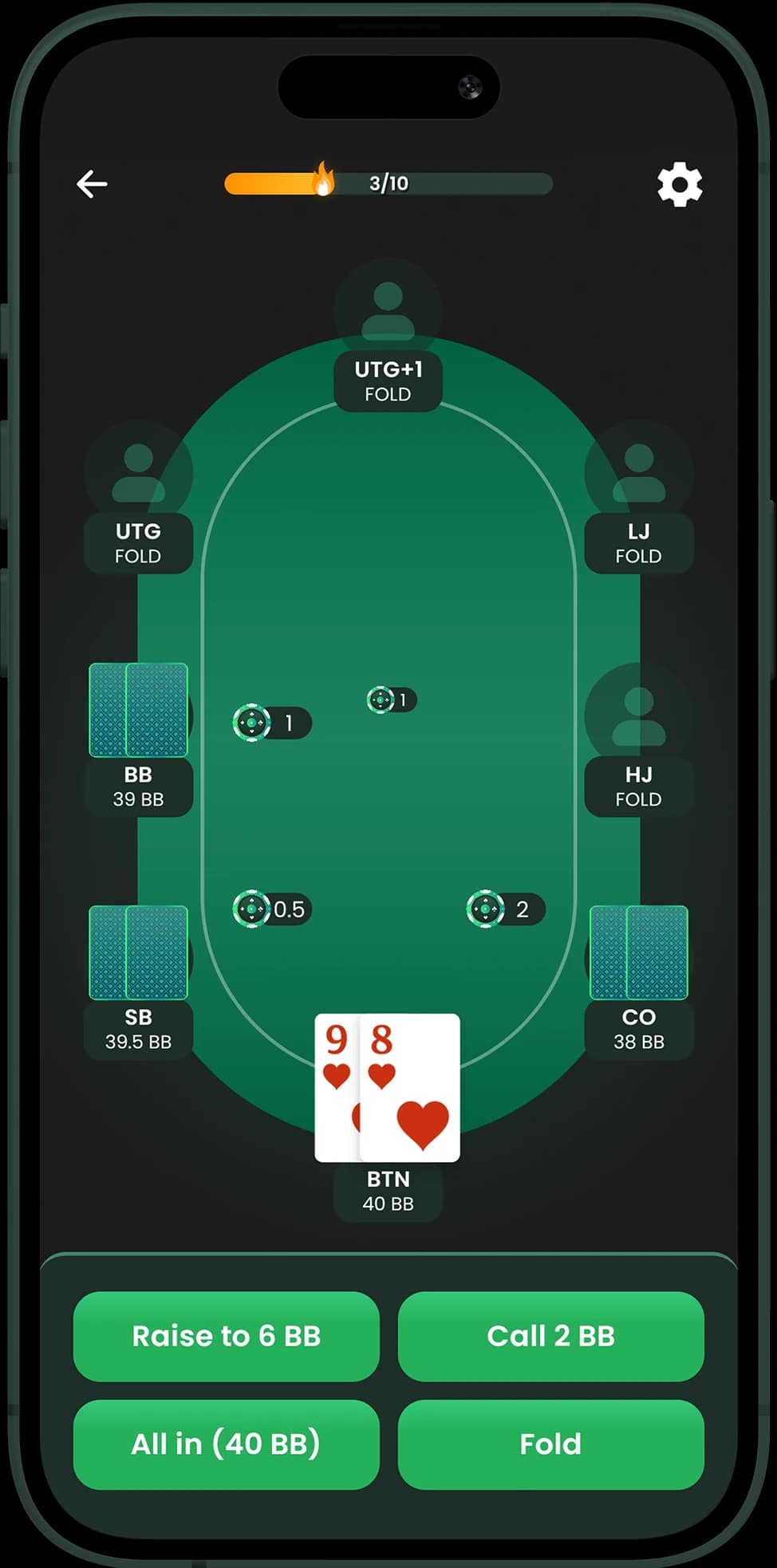
A true bad beat is losing a hand where you had a significant statistical advantage. AA losing to KK is a bad beat — you were 80% to win. KJ losing to AQ when you called a 3-bet from out of position is not a bad beat — you made a -EV decision that happened to lose. The confusion between these two categories is one of the most expensive misconceptions in recreational poker. Most 'bad beats' are actually bad decisions that resulted in a loss, which would have been a loss on average regardless of the specific outcome.
Start training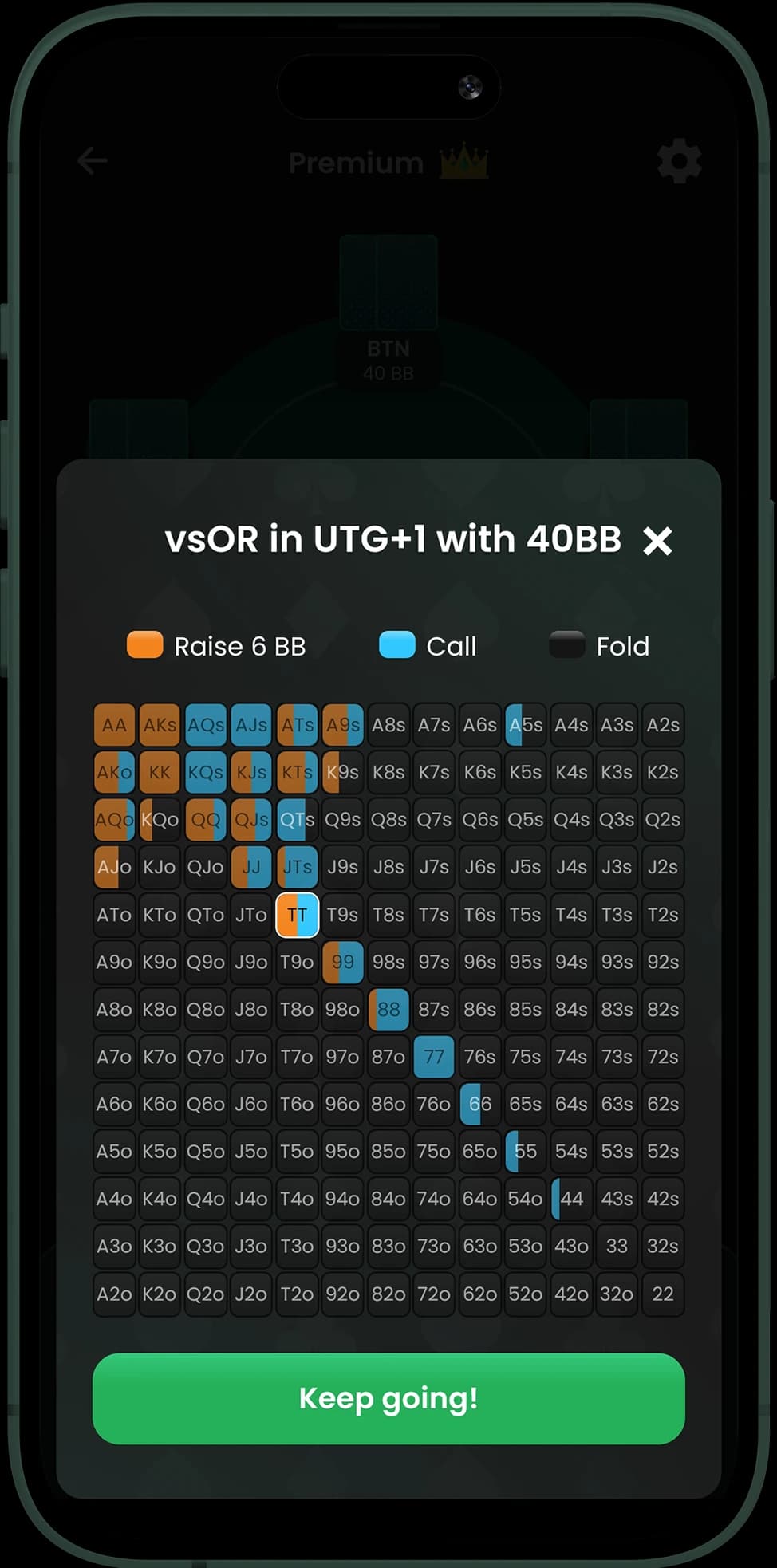
Why Our Brains Remember Bad Beats and Forget Bad Decisions
The psychological bias that keeps players stuck
Human memory has a negativity bias — painful events are encoded more strongly than neutral ones. Getting rivered with top set is painful; folding KQo from UTG is neutral. Over hundreds of sessions, players accumulate vivid memories of bad beats and almost no memory of the quietly costly decisions that happened dozens of times per session. This asymmetry creates a distorted picture: 'I keep making good decisions but losing to bad luck,' when the reality is often 'I make many bad decisions and occasionally lose to bad luck on top of them.'
The Honest Test: Expected Value Analysis
How to objectively evaluate your decisions
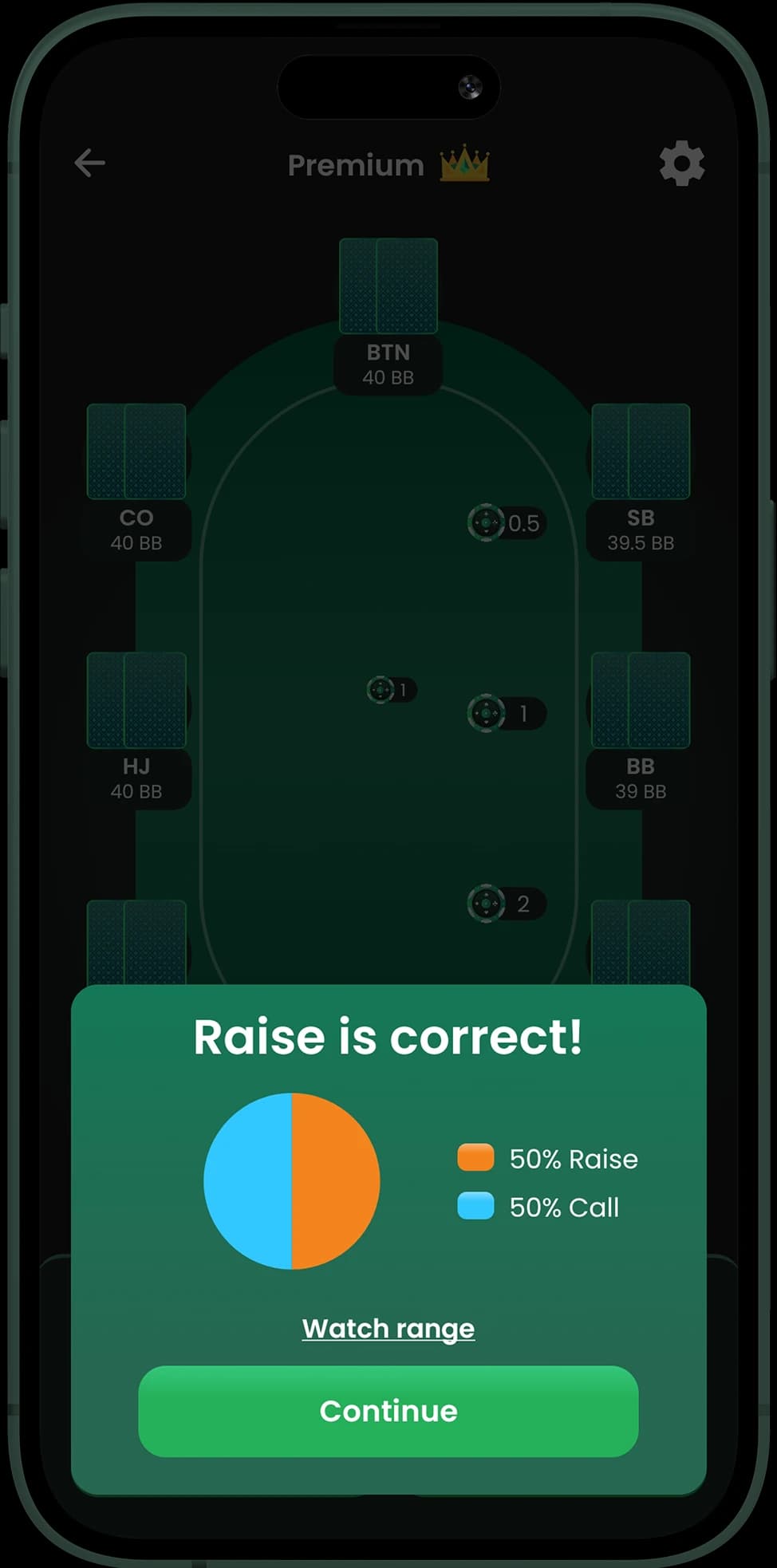
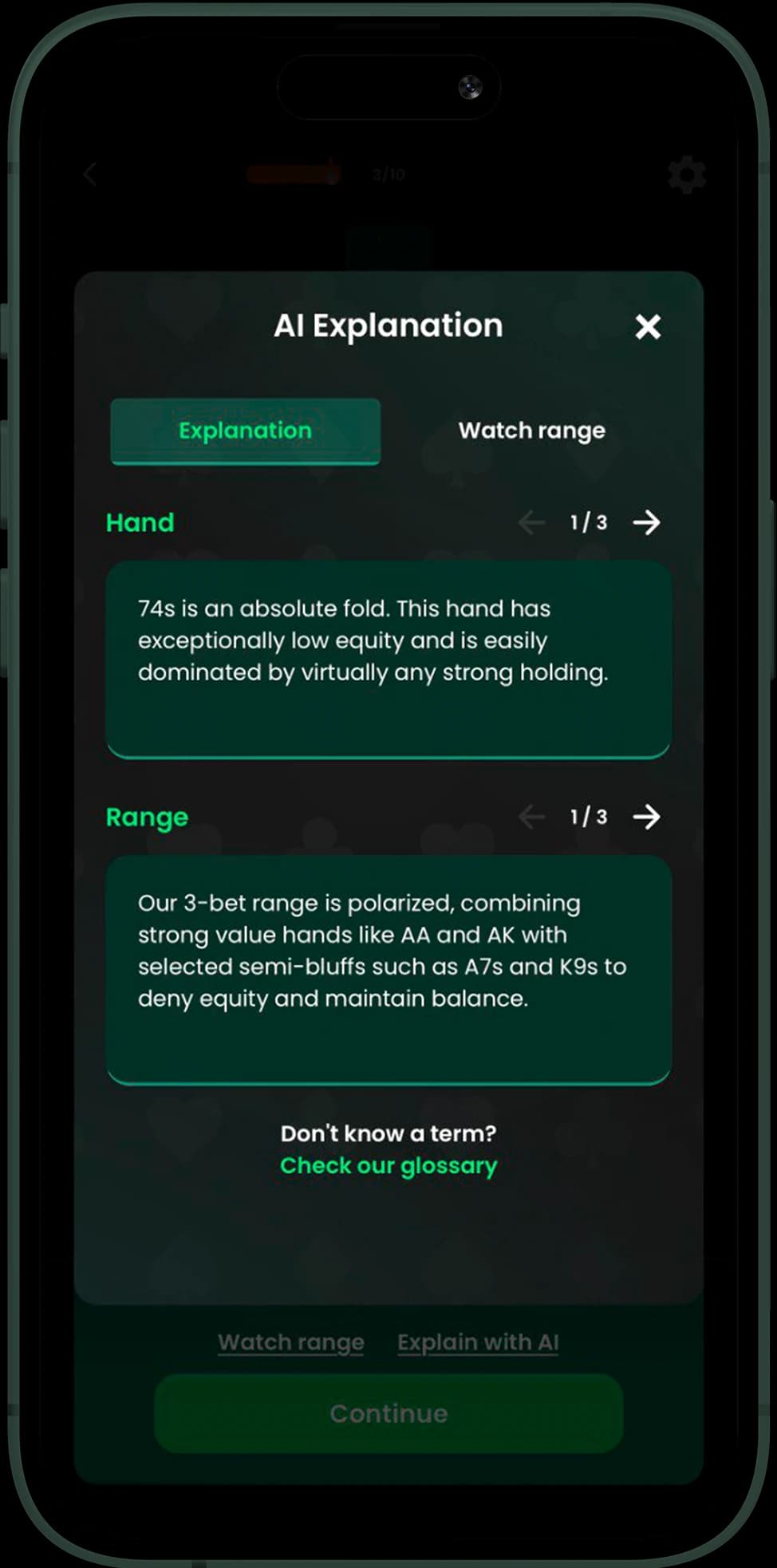
The honest way to evaluate a hand is expected value analysis: given the information available when you made the decision, did your action have positive or negative expected value? If you called a 3-bet with KTo from the small blind against a tight opener, you made a -EV decision regardless of whether you won or lost the hand. Winning that particular hand doesn't validate the decision; losing it doesn't invalidate it. Decision quality and results are different variables, and confusing them is what keeps losing players losing.
Signs Your Losses Are From Bad Play, Not Bad Beats
The honest checklist every losing player should read
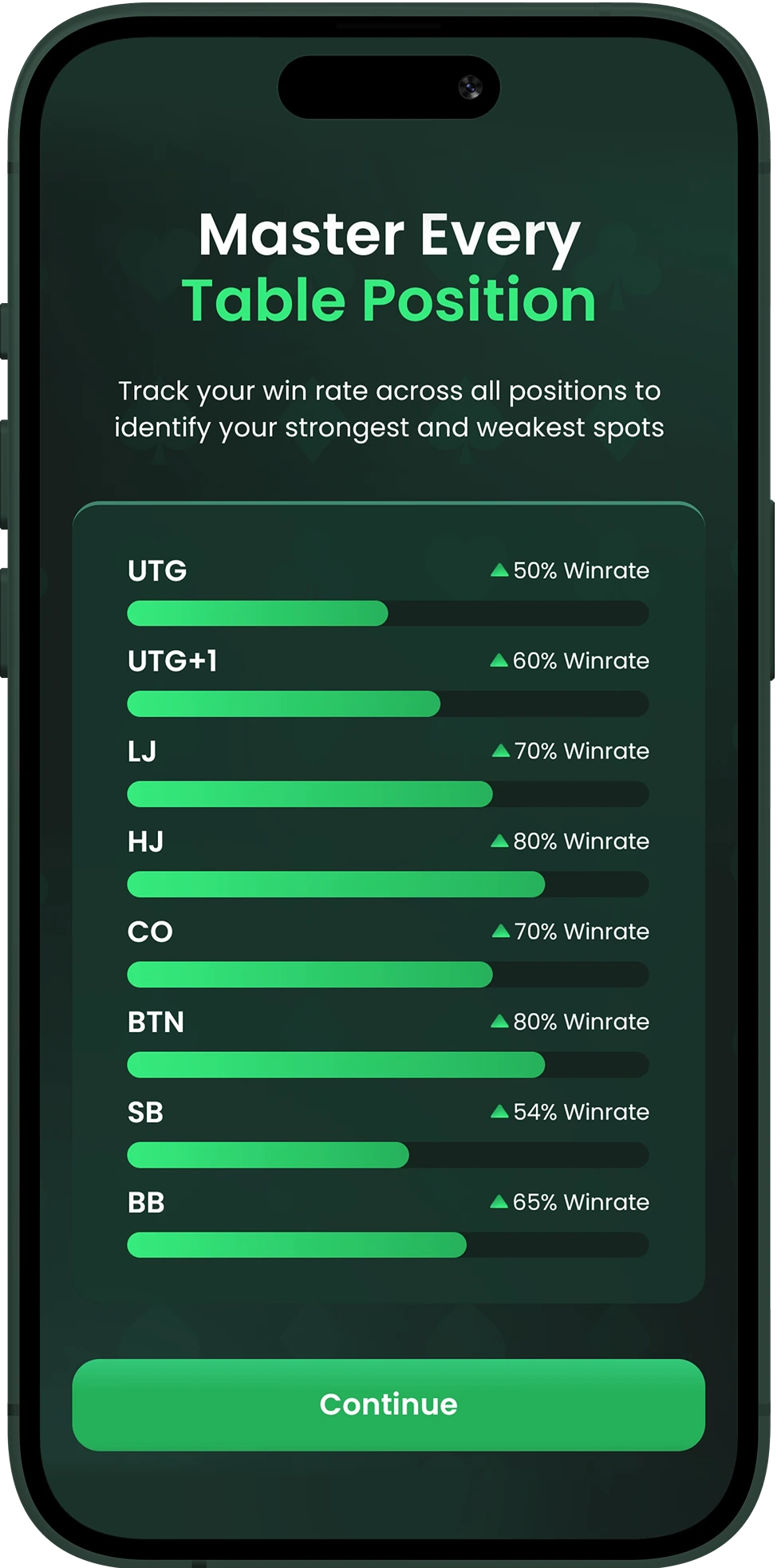
Your losses are likely from bad play if: you consistently lose over 50,000+ hands; your losses happen at multiple stake levels; the pots you lose are often ones you shouldn't have been in; you regularly find yourself in tough spots postflop with marginal hands; your VPIP is significantly higher than recommended ranges. These are strategic indicators, not variance indicators. Variance creates short-term swings; bad strategy creates long-term, consistent losses that follow you from game to game.
From Bad Beat Stories to Bad Decision Fixes
The mindset shift that enables actual improvement
The players who improve fastest share a common trait: they genuinely want to know when they made a mistake. They don't protect their ego by attributing losses to luck. They ask 'was that the right decision?' and accept honest answers. This mindset shift — from result-oriented to decision-oriented thinking — is what enables systematic improvement. Once you start asking what decision you made rather than what card fell, you can fix the decisions. You can't fix card distribution.
Start training
Bad Beats vs Bad Play FAQ
Start training
Stop Blaming Luck — Fix Your Decisions
Download PreflopAI and get honest, objective feedback on your preflop decision quality.