
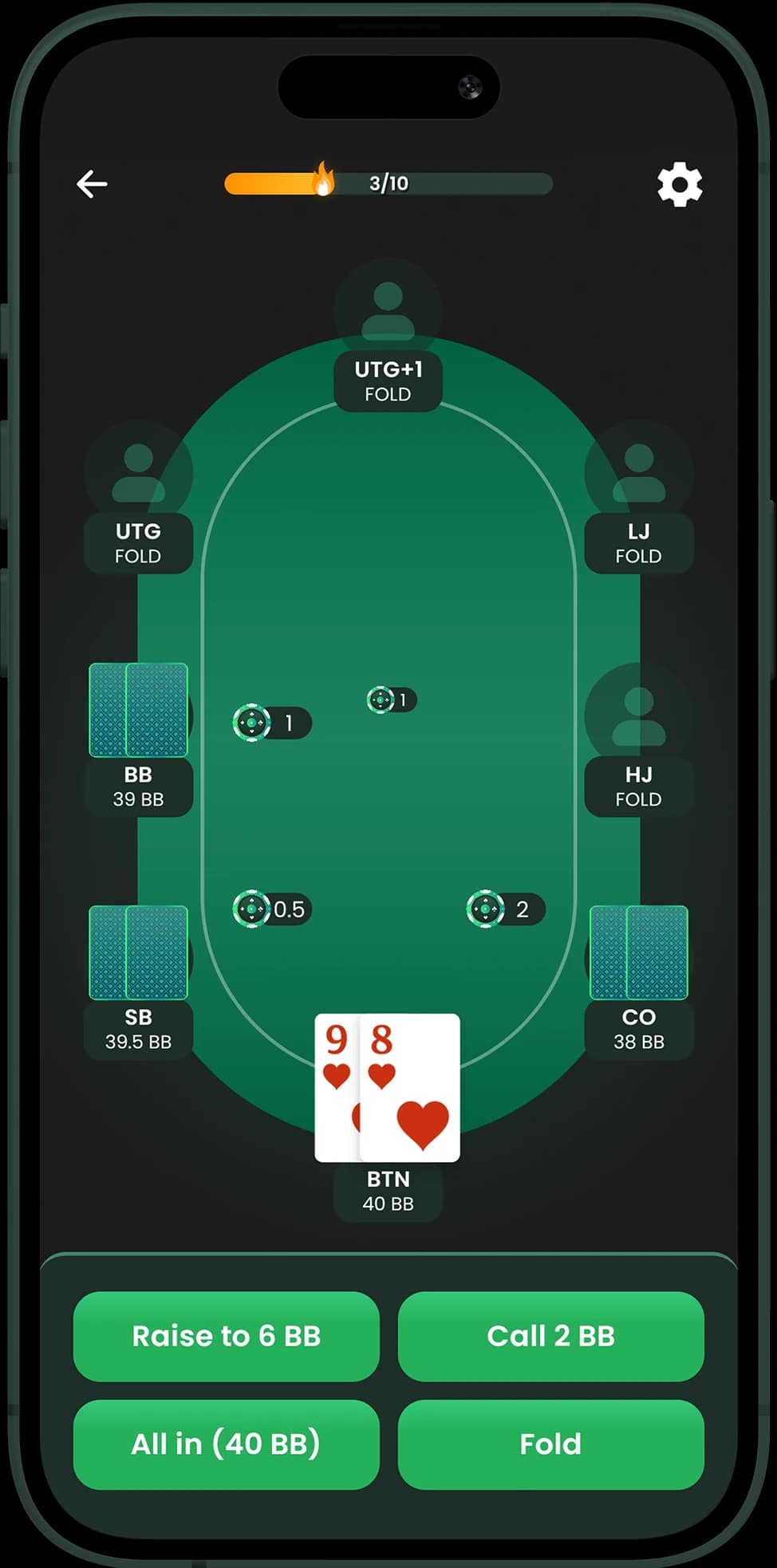
Poker 3-Betting: Why You're Leaving Money on the Table Every Session
Most recreational players 3-bet only AA and KK. Winning players 3-bet a balanced range that makes them far more profitable — and far harder to play against.
Start trainingWhat Is a 3-Bet and Why Does It Matter?
A 3-bet is a re-raise preflop: the first bet is the big blind, the second is an open raise, the third is your re-raise. 3-betting accomplishes several things simultaneously: it builds a larger pot when you have strong hands, it puts pressure on the original raiser, it denies equity to players behind you who might cold-call, and it defines your hand range to make postflop decisions easier. Most recreational players 3-bet too rarely and too predictably, making them straightforward to play against.
Start training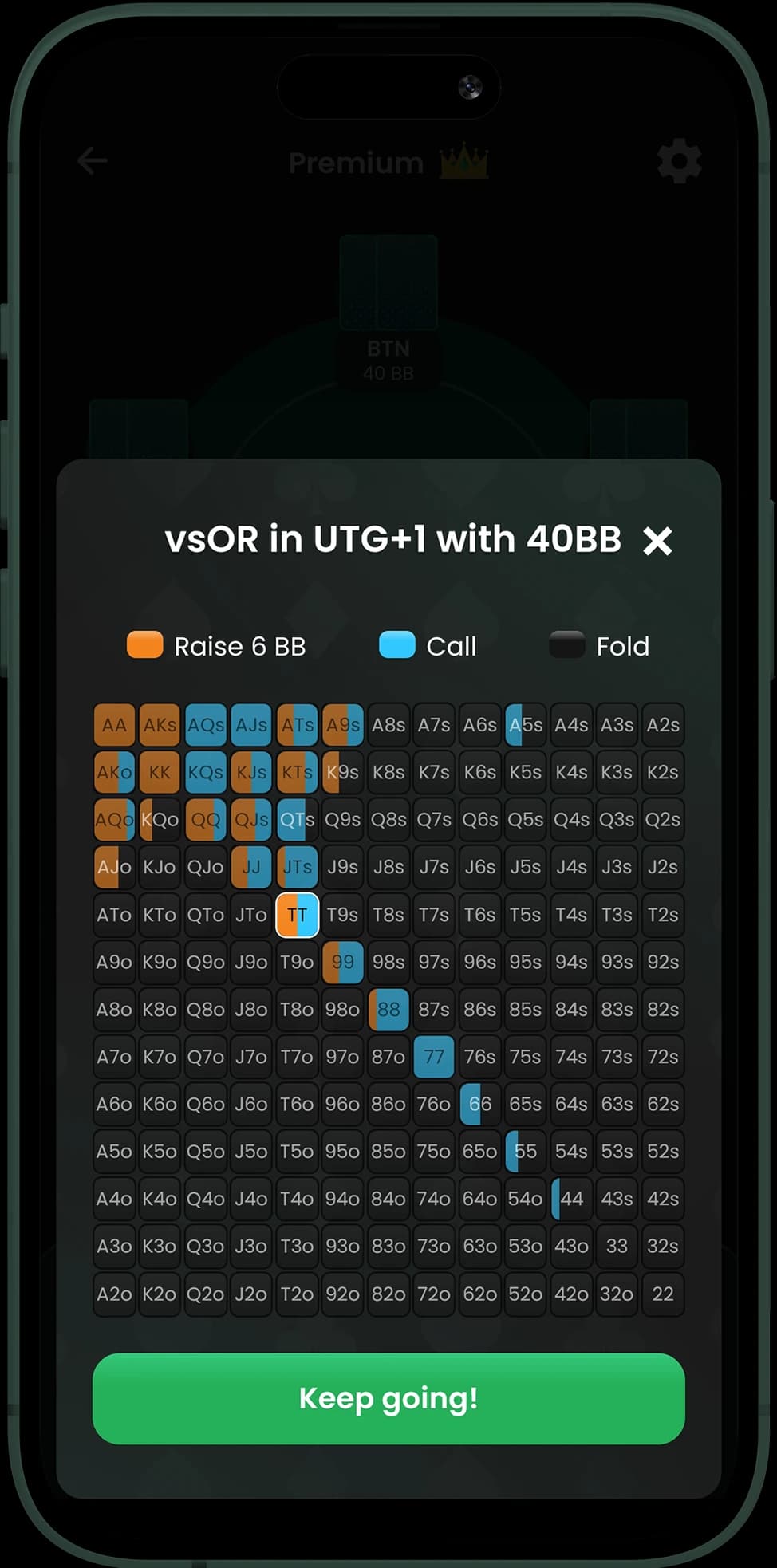
The Problem With Only 3-Betting Premium Hands
Why predictability is expensive in poker
When you only 3-bet with AA and KK, your range becomes readable. Experienced opponents will fold everything except their strongest hands when you 3-bet — maximally reducing your value. They'll also never worry about 3-bets as bluffs, making your opens easier to call. A balanced 3-betting range includes both value hands (QQ+, AK) and selected bluffs (hands that have fold equity and play reasonably well when called). This balance makes you unpredictable and extracts more value from your strong hands.
When to 3-Bet: Position and Situation
The specific spots where 3-betting has the highest impact
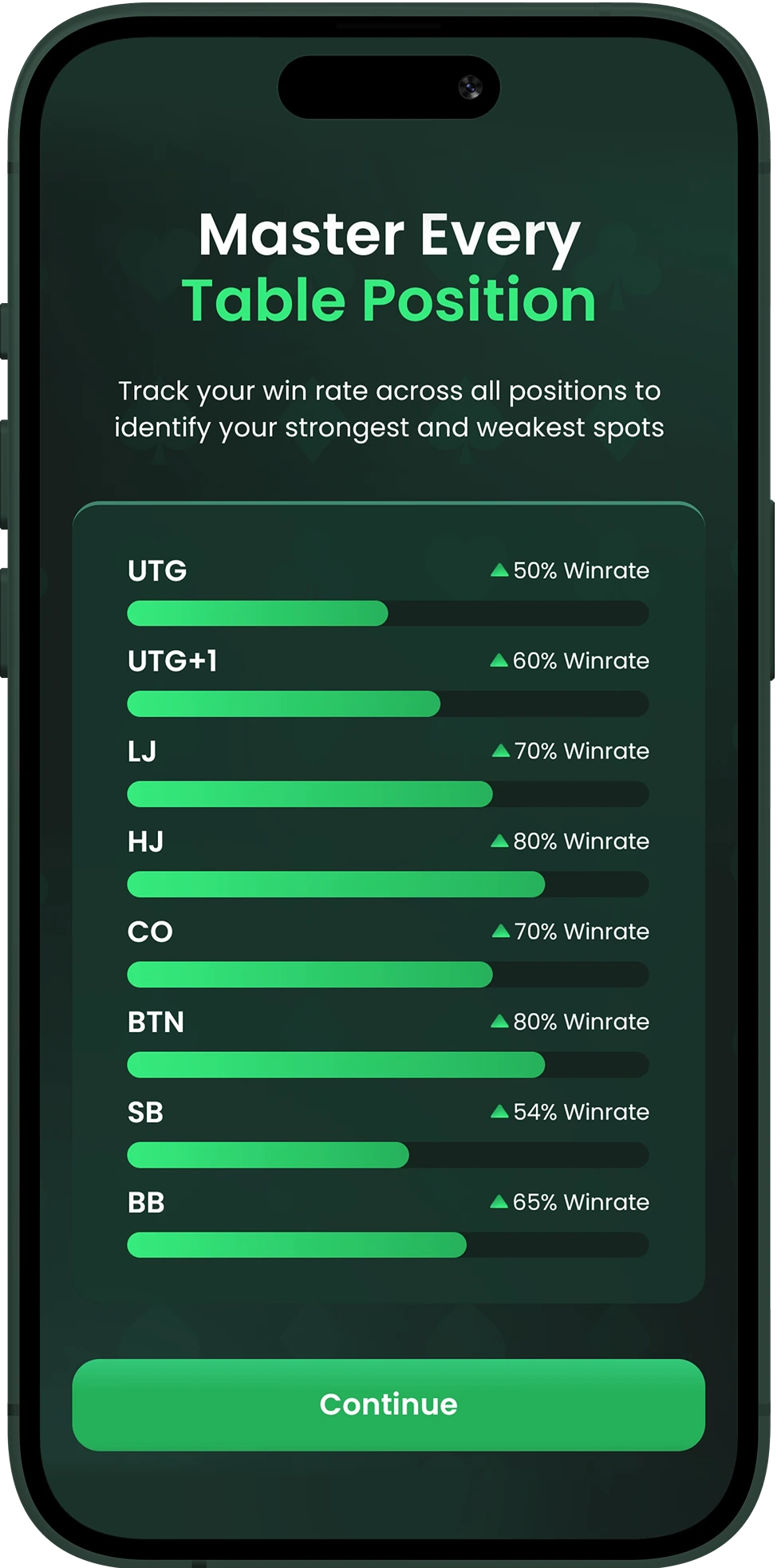
The best 3-bet spots combine favorable position, a wide opener, and hands that benefit from fold equity. Specifically: button and cutoff 3-bets against hijack and cutoff opens are highly profitable — position advantage plus attacking a wide opening range. Big blind 3-bets against late position opens are also strong — you're out of position but the opener's range is wide enough that fold equity compensates. Early position 3-bets require stronger hands because you'll often be out of position against callers behind you.
How to Build Your 3-Bet Range
The practical framework for adding 3-bets to your game
Start with your value range: QQ+, AK at minimum. Then add AQ and JJ based on opponent and position. For bluffs, select hands that have good equity when called (suited broadways like A5s, K4s that make strong flushes) and hands that block opponent calling ranges. The ratio should be roughly 2:1 bluffs to value hands for most positions. This ratio ensures you're hard to exploit — opponents can't profitably over-fold or over-call against your 3-bets.
Practicing 3-Bets: Why Theory Isn't Enough
The repetition gap between knowing and doing
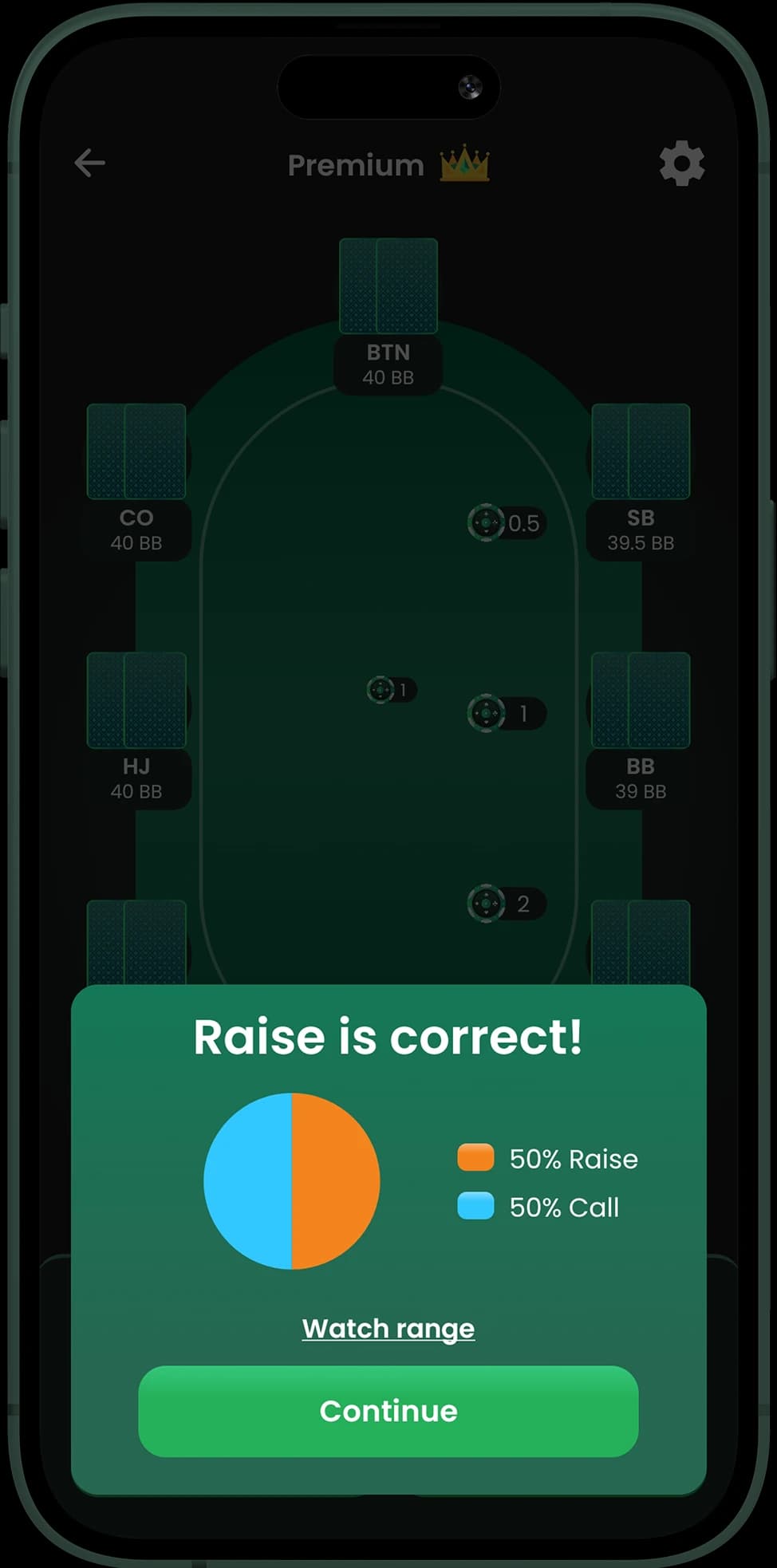
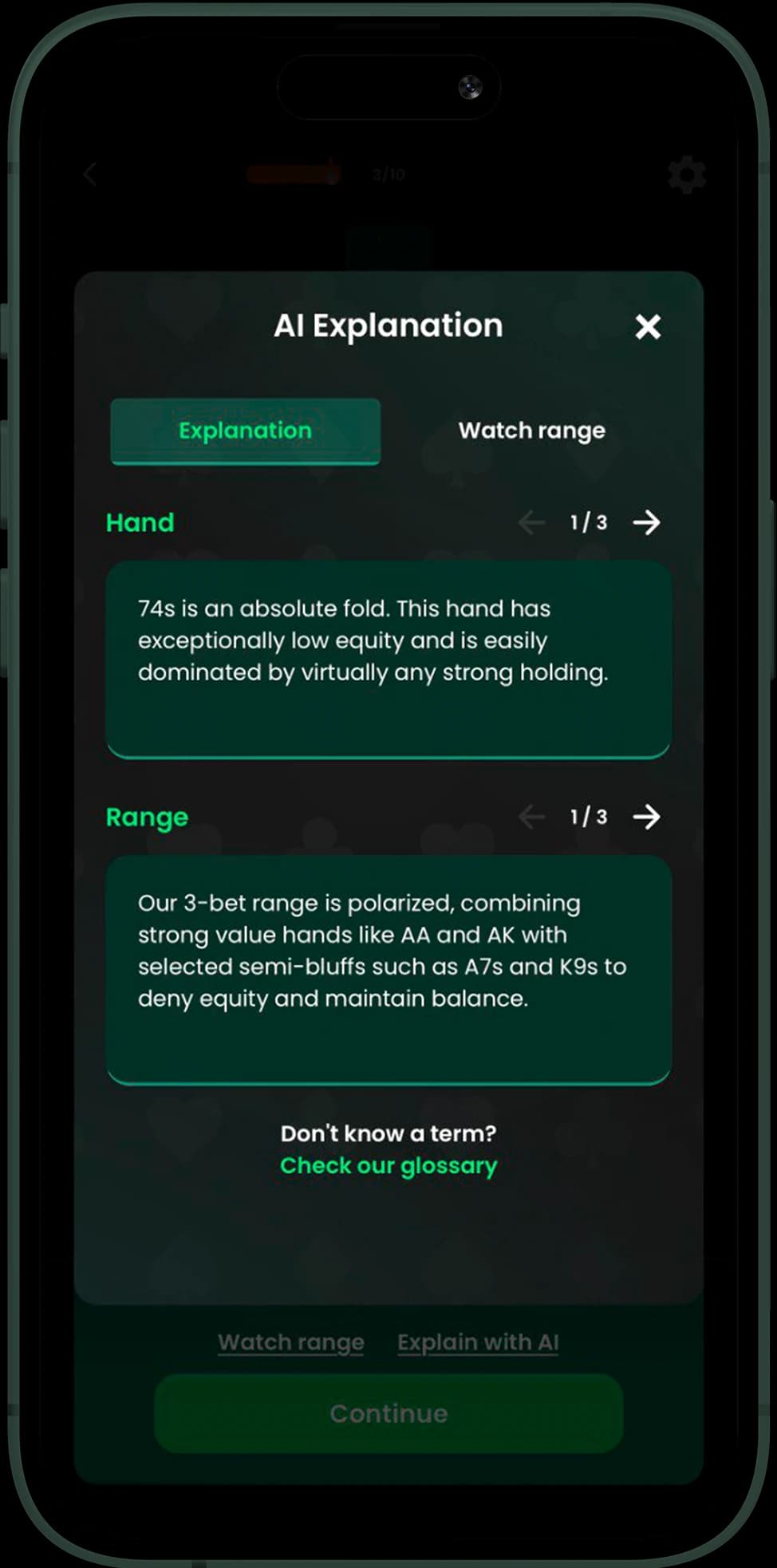
Understanding 3-bet theory is easy. Executing it correctly in real-time at the table — with the right frequency, the right hands, the right sizing — requires practice under realistic conditions. Scenario-based training where you're presented with a specific preflop situation (opener position, your position, your hand) and must decide whether to 3-bet, call, or fold builds the in-game intuition that theoretical knowledge can't. Regular practice of 3-bet decision scenarios is how you close the gap between knowing the theory and profiting from it.
Start training
Poker 3-Betting FAQ
Start training
Build a Winning 3-Bet Strategy
Download PreflopAI and train 3-bet decision-making with AI-powered scenario practice.