
How to Stop Losing at Poker: The Step-by-Step Fix
Stopping your poker losses is achievable — but it requires fixing the right things in the right order. Here's the step-by-step process that actually works.
Start trainingStep 1: Diagnose Where You're Losing
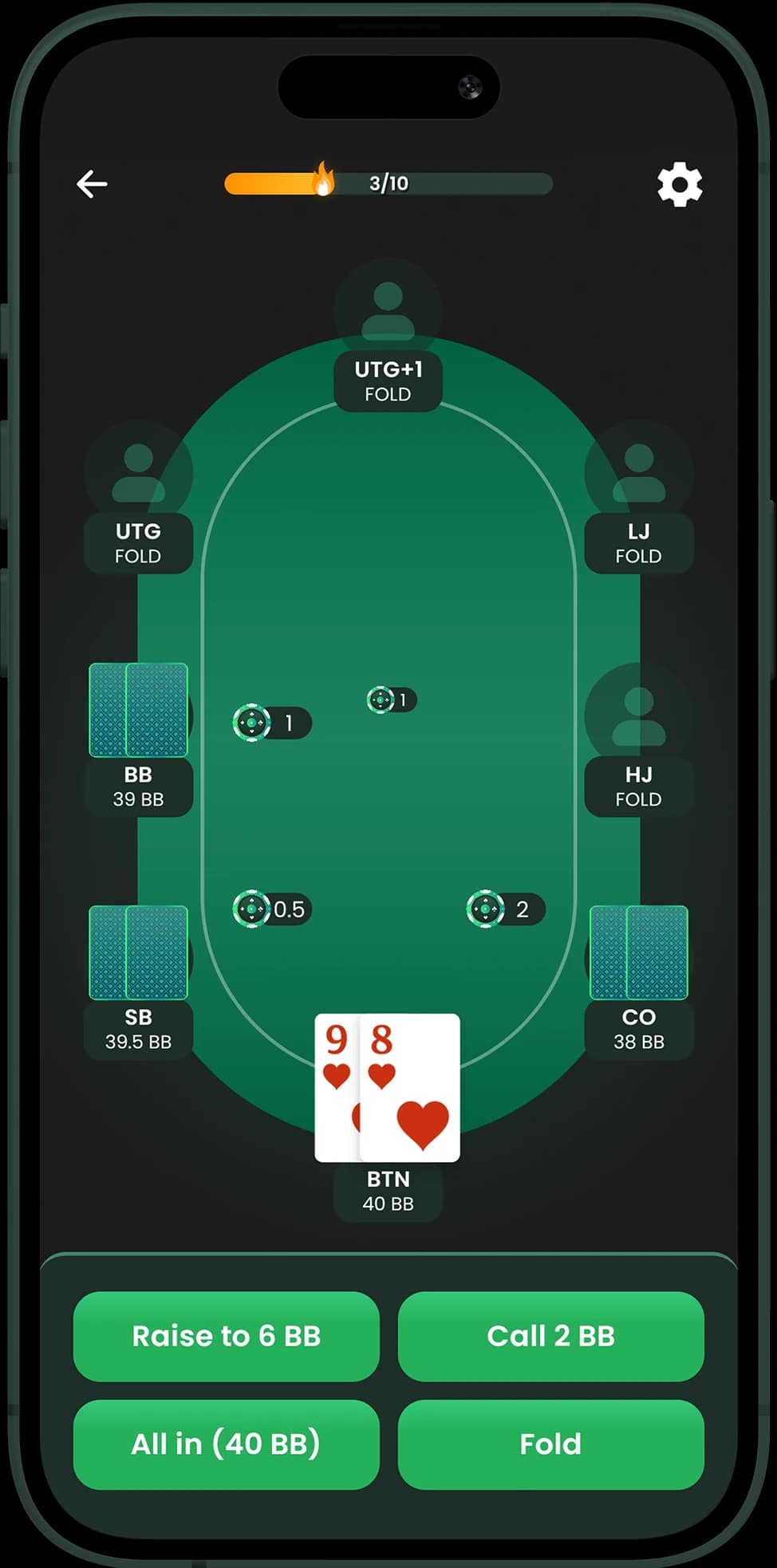
Before making any changes, you need to understand which decisions are losing you money. If you play online, review your statistics: VPIP, PFR, position-specific win rates. If you play live, recall the types of spots where you're most often building large pots and losing them — are you consistently losing with top pair out of position? Losing in 3-bet pots where you called preflop? These patterns are diagnostic. Most players skip this step and make random adjustments. The targeted approach — identifying specific leak categories and addressing them directly — produces faster improvement.
Start training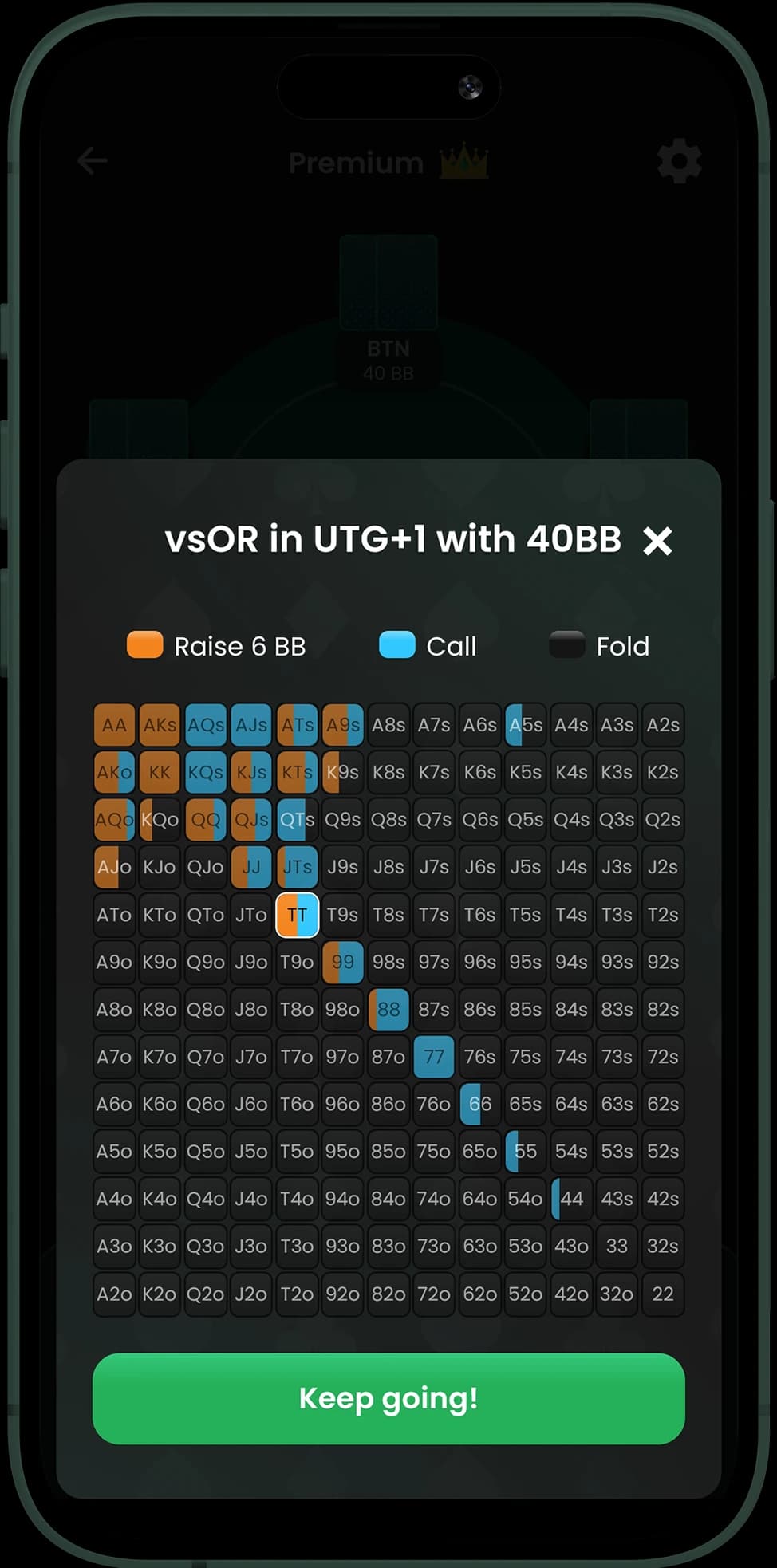
Step 2: Fix Your Preflop Ranges Position by Position
The highest-impact adjustment you can make
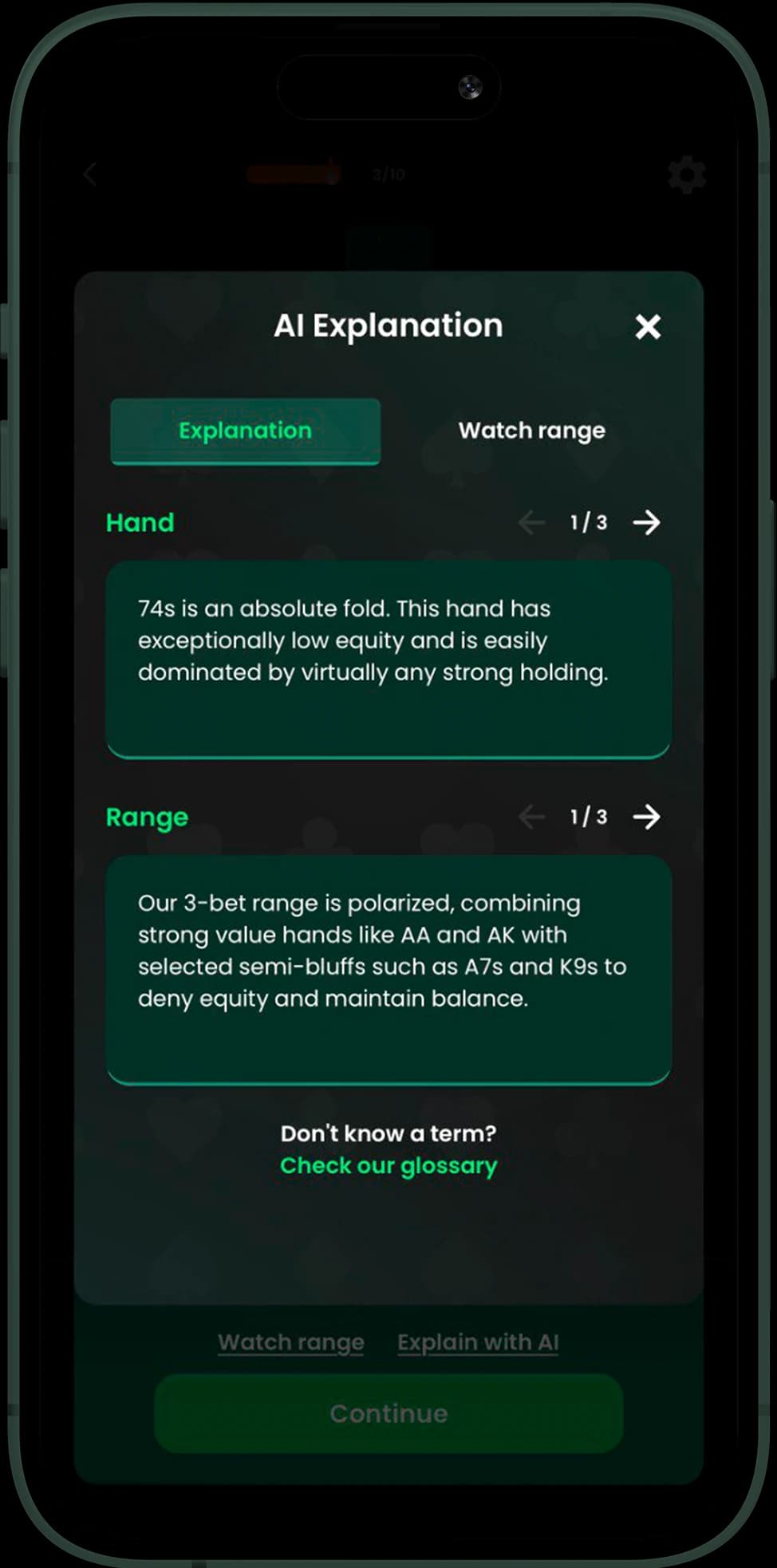
Once you've diagnosed your leaks, almost every losing pattern traces back to preflop hand selection or preflop action. The fix is systematic: learn and internalize the correct opening range for each position. Start with UTG and HJ (the tightest), then CO and BTN (wider), then the blinds (defensive). For each position, practice the correct decisions through active repetition — not just reading the range, but being tested on it until you can make the correct decision instantly without thinking.
Step 3: Implement Raise-or-Fold as Your Default
Eliminating passive calling from your preflop game
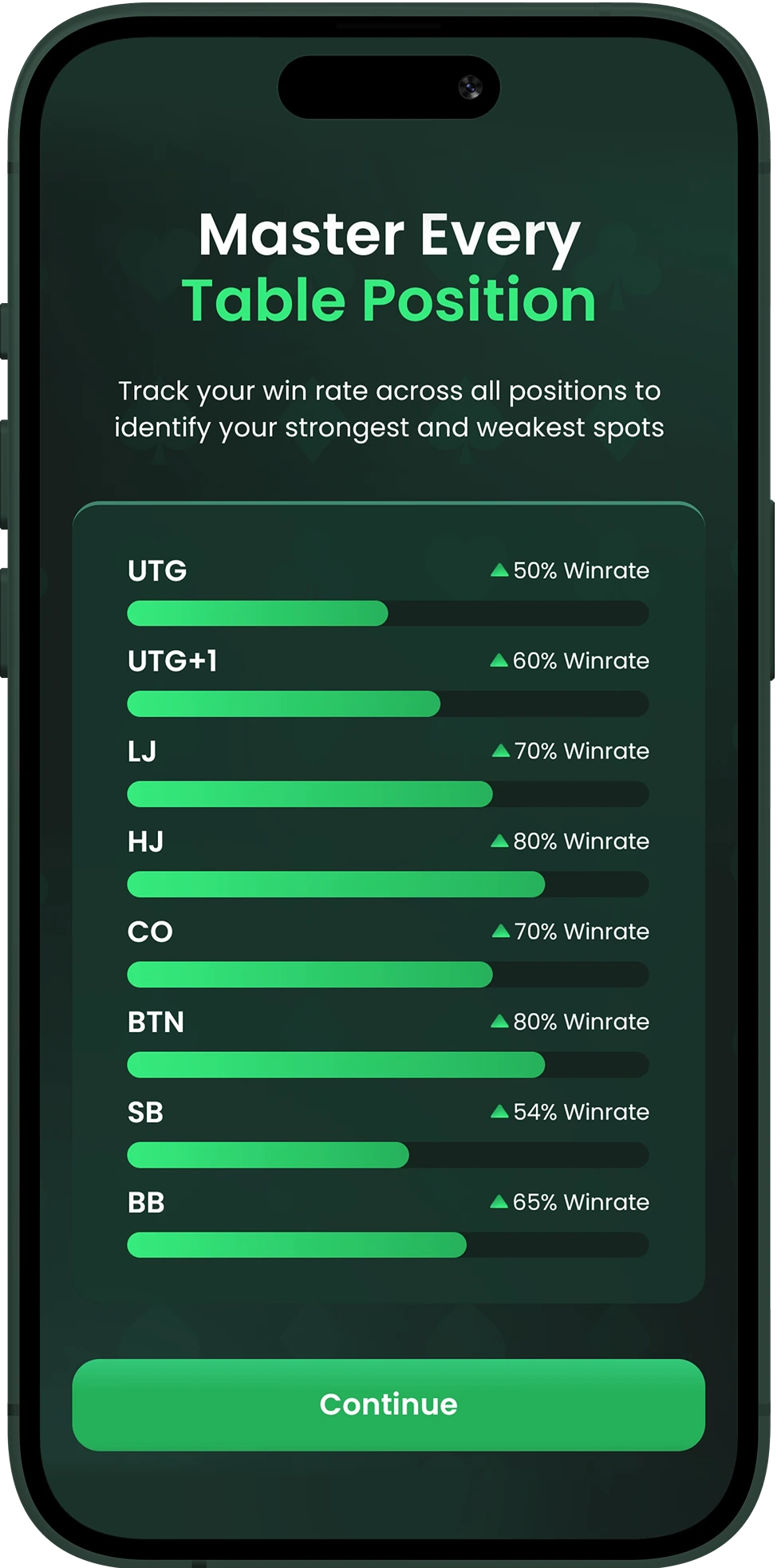
After fixing hand selection, address action quality. Most losing players call too much and raise too little. The fix: default to raise-or-fold. If a hand is worth playing, it's usually worth raising. If it's not strong enough to raise, it's usually worth folding. This eliminates limping, most preflop calls against opens, and most cold-calls of 3-bets with marginal hands. Exceptions exist but they're specific and few. Starting from raise-or-fold and adding back controlled calling situations is better than starting from calling and trying to restrict it.
Step 4: Track Your Progress with Objective Metrics
Measurement is what makes improvement legible
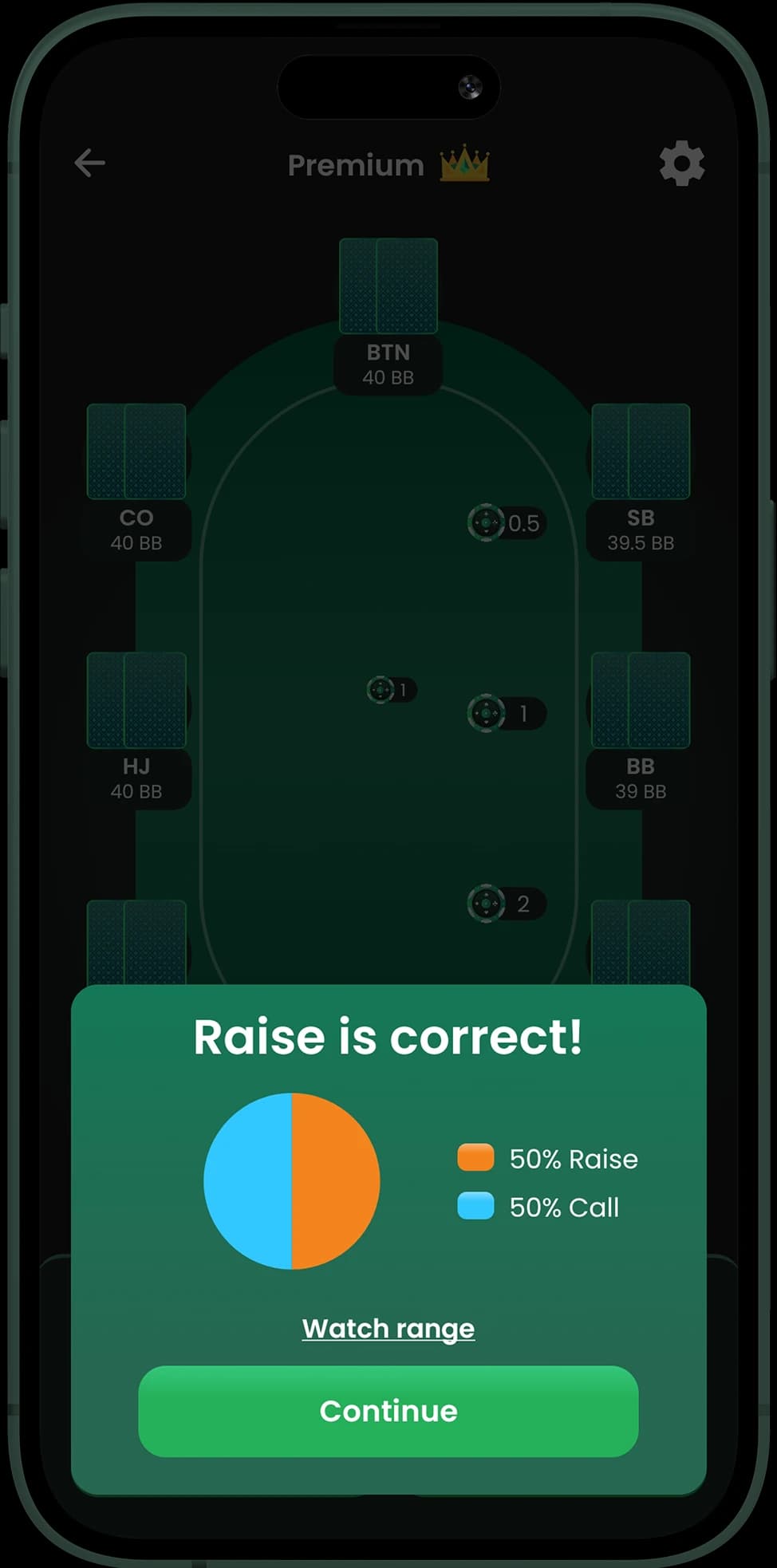
Improvement without tracking is invisible. Set up a simple session log: date, hands played, net result in big blinds, any specific leaks worked on, any notable spots. Over time, watch your win rate trend. Don't evaluate on single sessions — evaluate over rolling 5,000 and 10,000 hand windows. Track training metrics too: if you're using an app, watch your preflop accuracy by position trend upward. These numbers give you objective evidence that your decisions are improving, separate from short-term result variance.
Step 5: Be Patient — Win Rate Improvement Takes Volume
The timeline expectations that prevent premature discouragement
Realistic timeline: 2-4 weeks of daily preflop training to notice cleaner decisions at the table. 1-3 months of combined training and play to see early win rate improvement signals. 3-6 months to establish a reliable win rate trend that accounts for variance. Poker improvement is real but slow-revealing because of variance. Players who give up after 2,000 hands with no visible improvement quit just before the signal starts emerging from the noise. Trust the process: fix the decisions, play enough hands, and the results follow.
Start training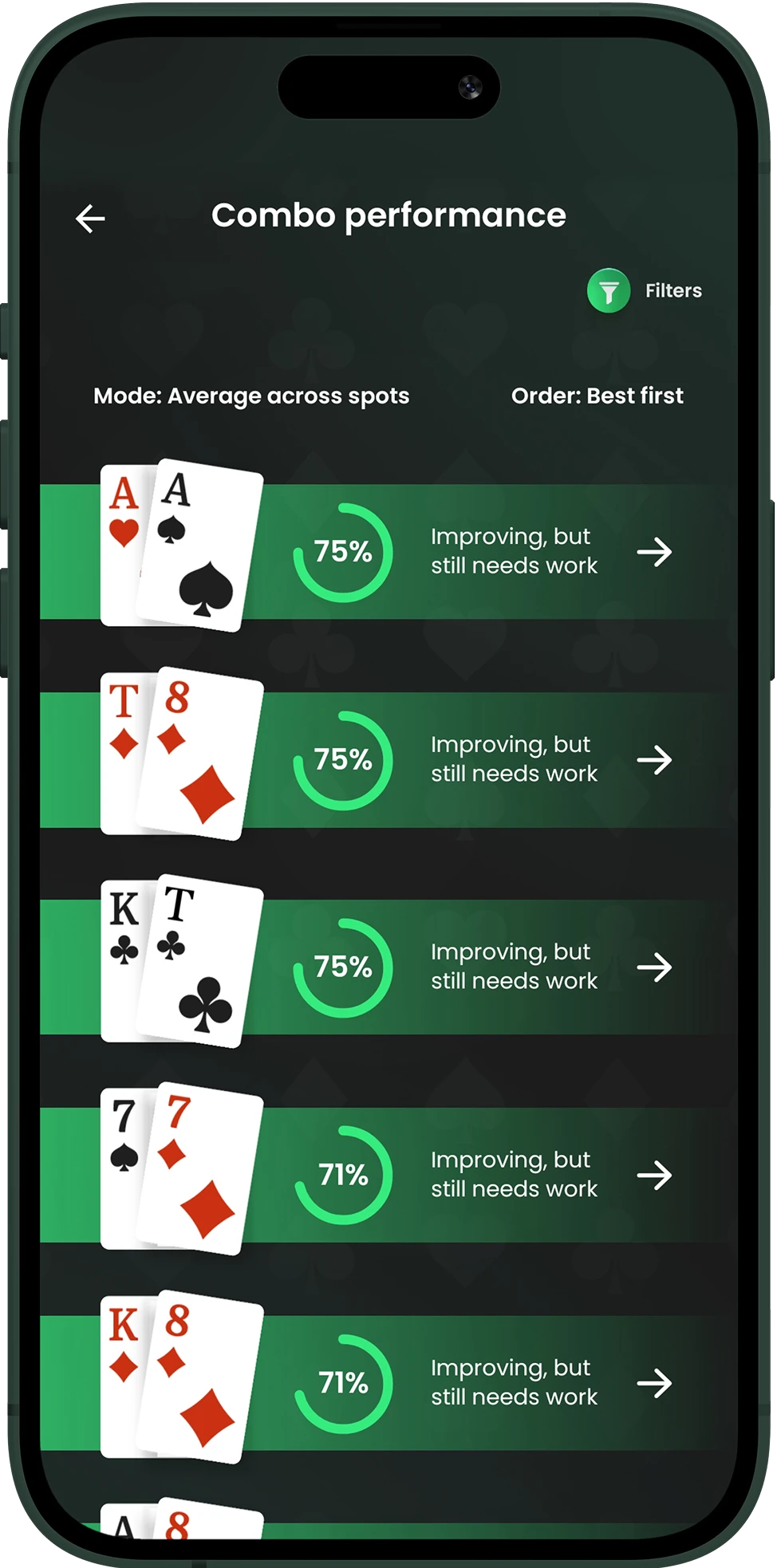
Stopping Poker Losses FAQ
Start training
Follow the Process That Stops Poker Losses
Download PreflopAI and start the systematic preflop improvement that reverses your results.