
How Position Affects Poker: The Concept Worth More Than Any Tell
Acting last is the most valuable thing in poker. Understanding why — and applying it to every preflop decision — is the solution most losing players are looking for.
Start trainingWhat Is Position in Poker and Why Does It Matter?
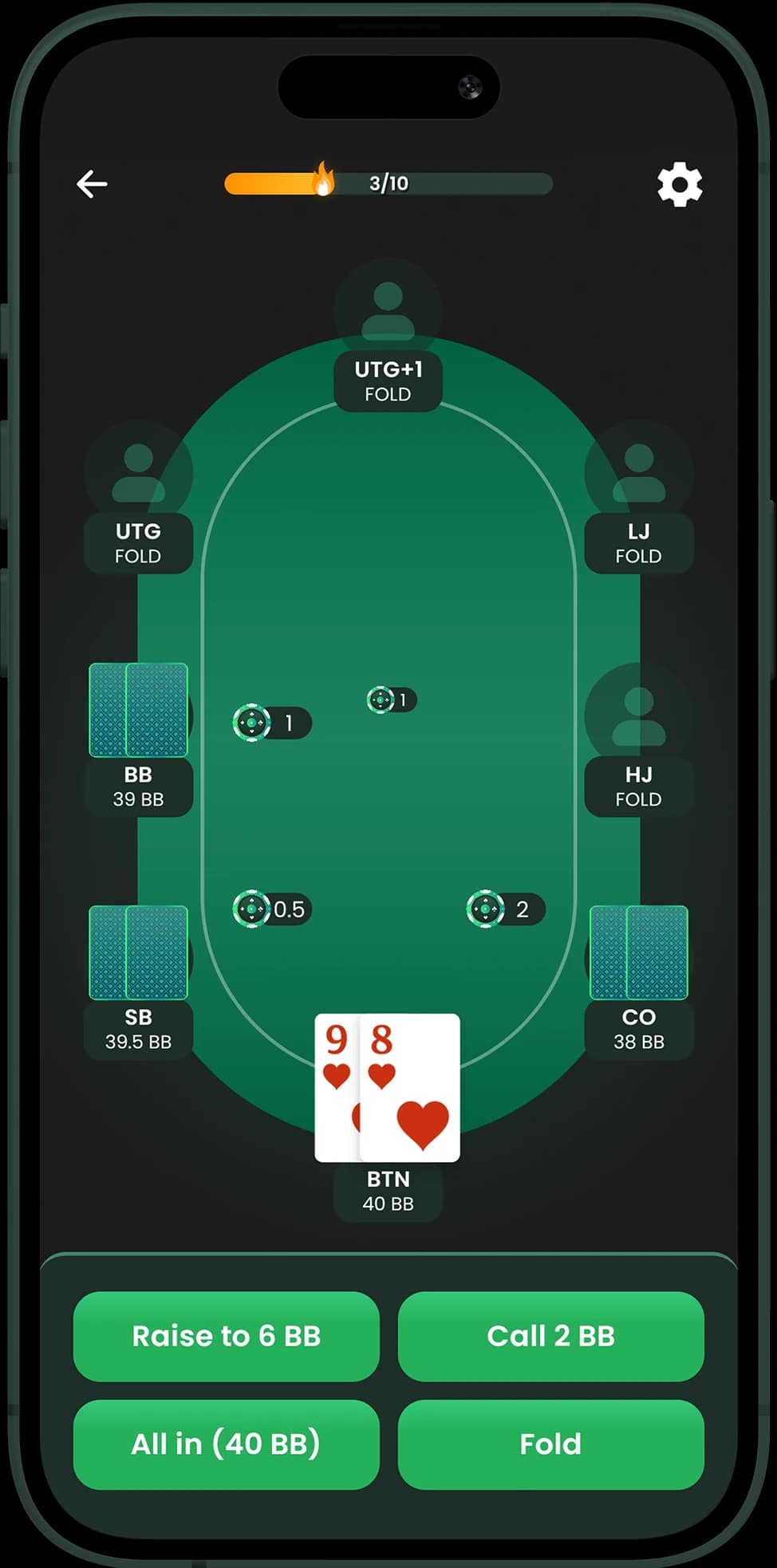
Position in poker refers to where you sit relative to the dealer button, which determines the order of action. Players who act later in the betting order have a decisive advantage: they see what everyone else does before making their own decision. This informational advantage applies preflop and compounds on every subsequent street. Acting last, you know whether opponents checked, bet, raised, or folded before you decide. This information is so valuable that entire preflop strategies are built around maximizing time spent in position.
Start training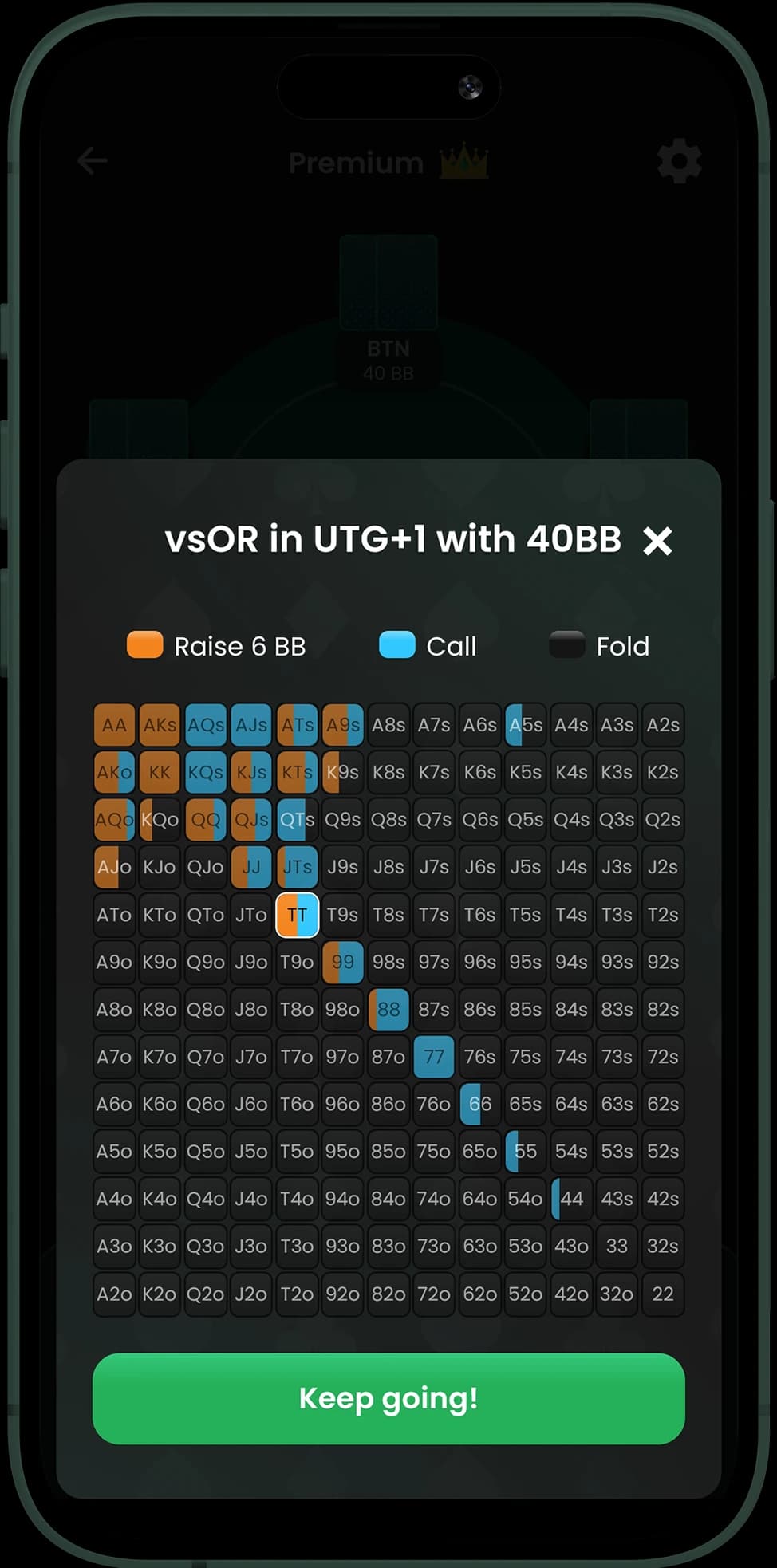
Position and Hand Selection: The Core Relationship
Why your range must change based on where you sit
The most important application of position in poker is hand selection preflop. Hands that are profitable from the button are often losing plays from early position — not because the hands are different, but because the positional context changes their expected value. A hand like 76s has potential but plays best in position with deep stacks, where you can see all streets acting last. From UTG, you'll often find yourself out of position the entire hand, unable to use the hand's potential. Position-aware hand selection is the core of GTO preflop strategy.
The Button: Why It's the Most Profitable Seat at the Table
Understanding the mathematical edge of acting last
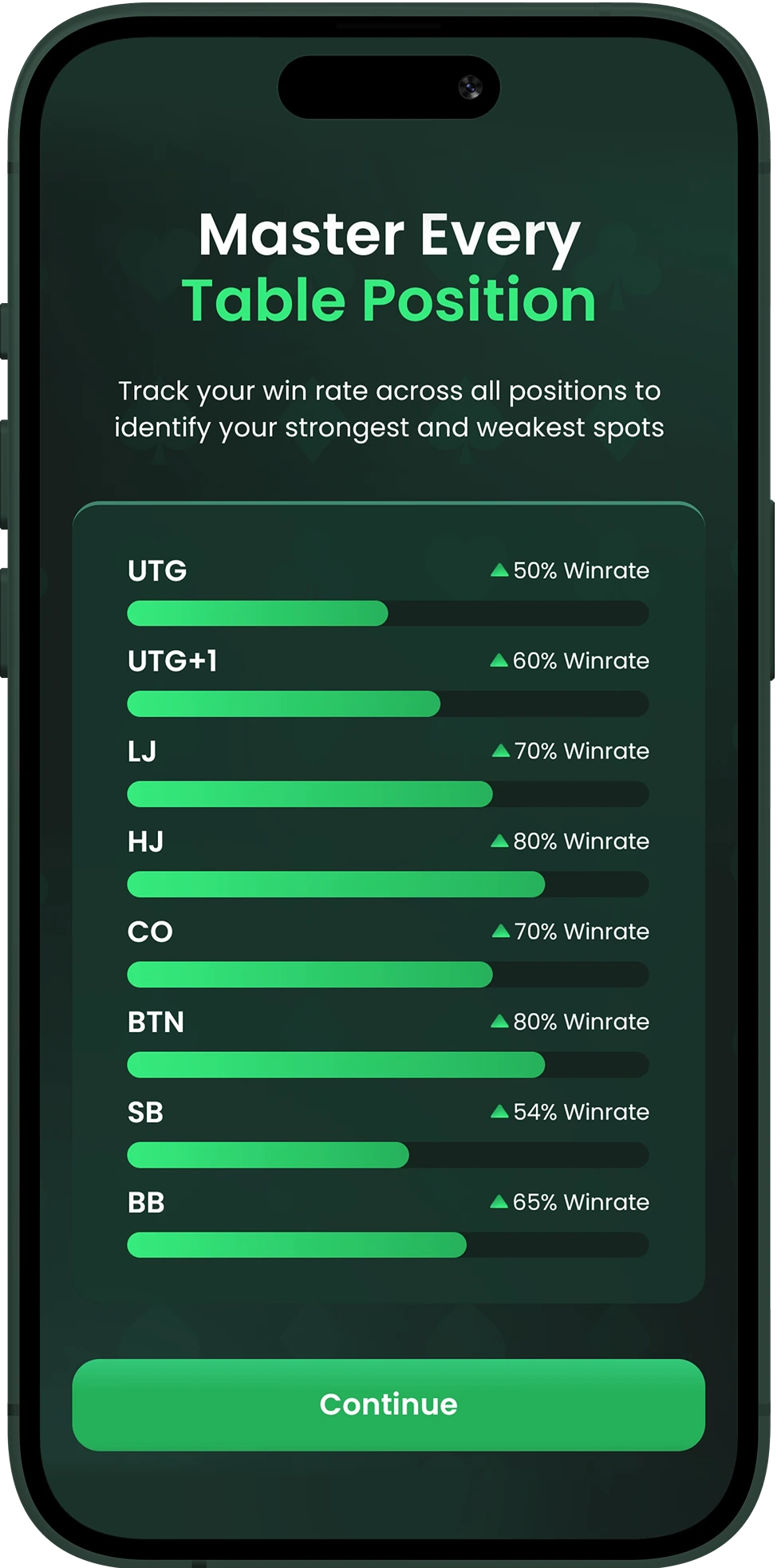
The button is the most profitable position in poker, period. You act last preflop (after the blinds) and last on every postflop street. This means you can see every opponent's action before making yours — check or bet, call or fold, bluff or value bet. Studies consistently show that button players have the highest win rates at any table, often by a significant margin. Optimal button strategy involves playing significantly more hands (40-50% vs 12-15% from UTG) to capitalize on this informational advantage.
Early Position: Why Tight Is Right
The mathematical reason UTG requires premium hands
From UTG (under the gun), you act first preflop and will typically act first on all subsequent streets. This means you have no information about your opponents' intentions and will spend the whole hand disadvantaged by acting before them. This informational cost is why UTG ranges must be tighter — only hands strong enough to profitably navigate the positional disadvantage. Hands that can 'deal with' being out of position are premium, coordinated, or high-equity holdings. Speculative hands suffer in early position and should be folded.
Applying Position to Every Preflop Decision You Make
The practical framework for in-game application
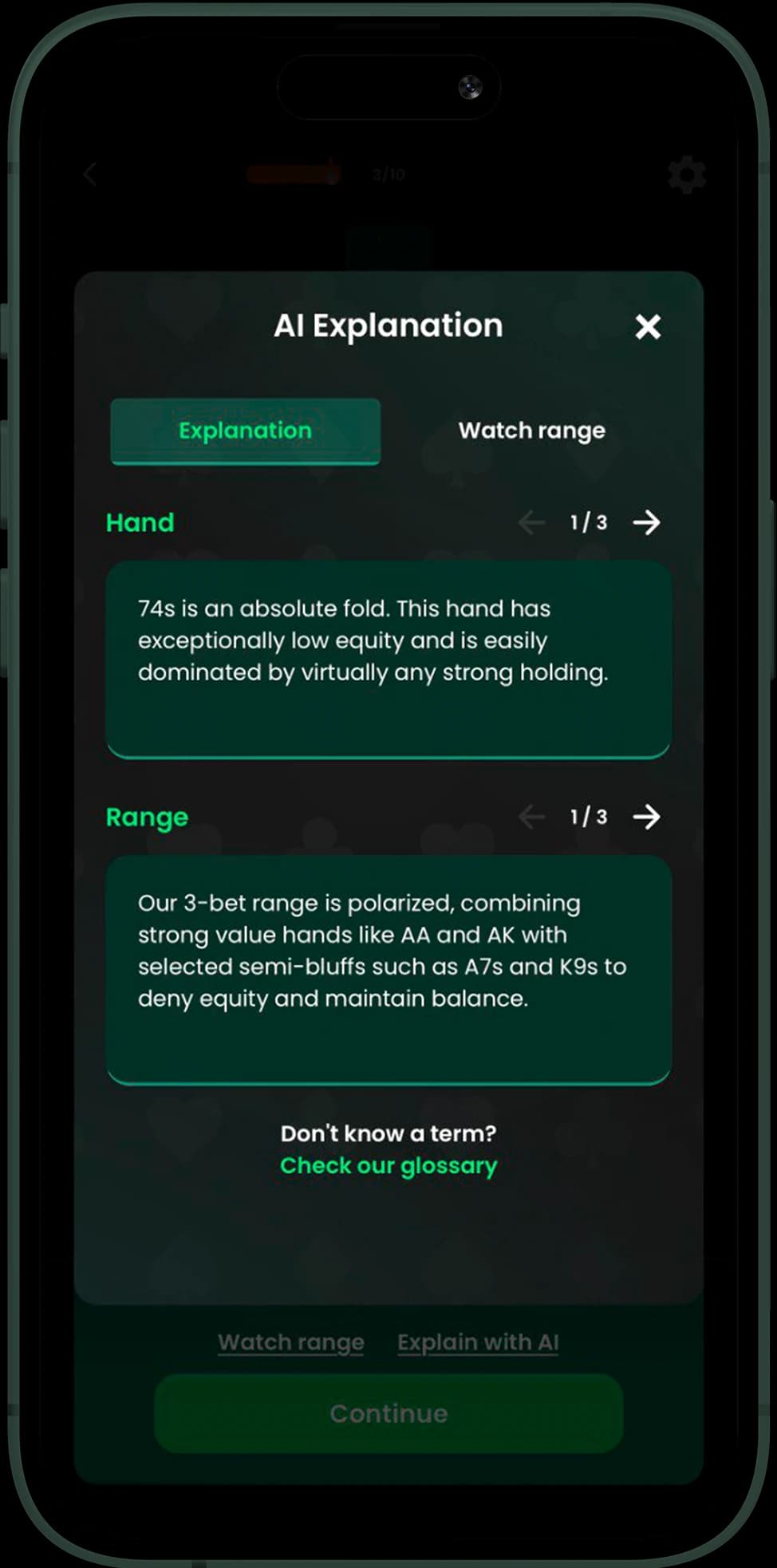
Every preflop decision should start with position assessment: where am I relative to the remaining players, and will I have positional advantage or disadvantage after the flop? This assessment changes your response to every situation: you'll 3-bet more from the button than from the blinds, you'll defend wider in the big blind than the small blind, you'll open wider from late position than early. Position-first thinking is the practical framework that makes preflop decisions systematic rather than intuitive — and systematic decisions are both faster and more accurate.
Start training
Position in Poker FAQ
Start training
Master Position-Based Preflop Strategy
Download PreflopAI and train the position-specific ranges that move your win rate.